Recipes · lunch, dinner
Baby Bolognese with Pasta (10+ Months)
A family bolognese adapted for babies: ground meat, carrot, onion and tomato passata, with no salt, stock or celery. Served with tiny pasta from 10 months.
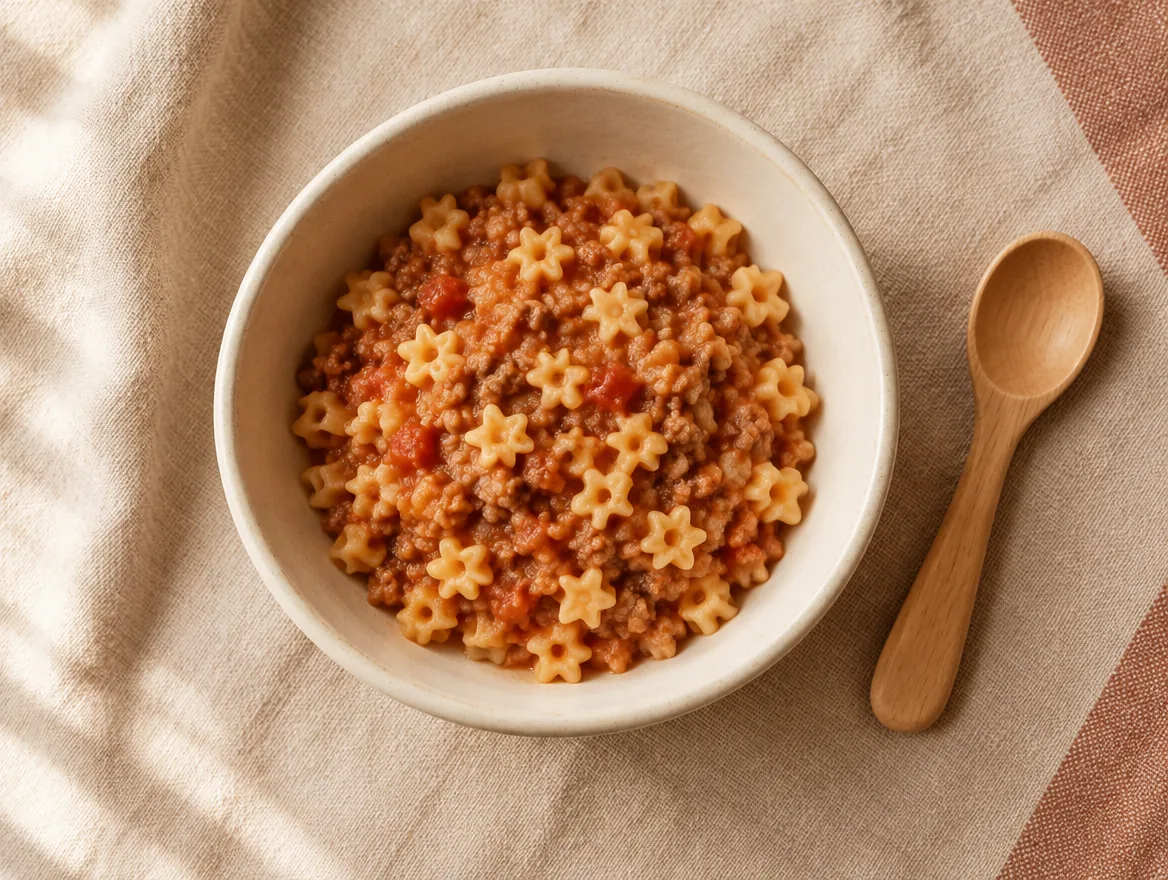
Illustration of the dish created with the help of AI.
- For babies from 10 months
- Prep 10 min · cook 40 min
- sauce for 2 adults and a baby
Allergens
- Glutenwheat, rye, barley, oats, spelt
Free from egg, dairy.
The pasta is made from wheat and contains gluten. For a gluten-free version, serve the sauce with rice, boiled potato or gluten-free pasta. If you add celery to the sauce, the recipe contains celery too.
Ingredients
- 250 g (about 9 oz) ground (minced) beef or turkey
- 1 small onion
- 1 carrot
- 1 garlic clove, optional
- 1 tbsp olive oil
- 400 ml (about 1⅔ cups) tomato passata (strained tomatoes) with no added salt
- ½ tsp dried oregano or a few fresh basil leaves
- 40 g (about 1½ oz) tiny pasta for your baby, such as stars or orzo; any pasta you like for the adults
Method
- 1Peel the onion and carrot, then grate or chop them finely. The finer they are, the better they melt into the sauce.
- 2Sauté the onion and carrot in the olive oil with a tablespoon or two of water for about 5 minutes, until soft. Add the crushed garlic and cook for another minute.
- 3Add the meat and cook for 5 to 7 minutes, stirring and breaking up the lumps with a wooden spoon, until it has completely changed color and no pink remains.
- 4Pour in the passata and about 100 ml (a scant ½ cup) water, add the oregano or basil, then cover and simmer over low heat for 25 to 30 minutes, stirring now and then. If the sauce gets too thick, add a splash of water.
- 5Meanwhile, cook your baby's pasta in unsalted water for a minute or two longer than the package says, so it's soft.
- 6Set aside your baby's portion of sauce and mix it with the pasta. Only then salt the rest of the sauce for the adults.
- 7Let your baby's portion cool and check the temperature before serving.
Rate this recipe
Click a star, or choose one with the arrow keys and press Enter.
Bolognese without salt, stock or celery
Grown-up bolognese gets much of its flavor from salt, stock cubes, wine and celery. Your baby needs none of these: the flavor comes from the meat, the tomato, the onion and the carrot that cooks slowly in the sauce. Store-bought passata often has added salt, so check the label and look for one where tomatoes are the only ingredient. (In the UK, don't confuse passata with tomato purée, which is a concentrated paste.)
Celery is left out on purpose because it's one of the 14 major allergens in the UK and EU, although it isn't on the US list of nine. Once your baby has tried celery on its own, you can finely grate some in with the carrot, but then the recipe contains celery too.
Adapting it by age
- From 10 months: tiny, soft-cooked pasta with sauce, which your baby eats from a spoon or with their fingers. The meat in the sauce should be fine and crumbly, with no lumps.
- From 12 months: bigger pasta such as fusilli or short macaroni, with a little grated parmesan.
- For a younger baby, from 8 months: blend the pasta and sauce briefly or mash them with a fork.
For the whole family
The sauce is cooked for everyone, and your baby's share is set aside before any salt goes in. The adults season their own plates and add parmesan. Parmesan is very salty, so in the first year give your baby only a little, if any. If your baby prefers finger food, serve the same sauce with baby meatballs.
Safe feeding
Always feed your baby sitting upright and never leave them alone while eating. Offer a new food in the morning or early afternoon and watch for a reaction over the next two to three days. Before 12 months, add no salt, sugar or honey. Food is best eaten straight away; if any is left, cool it quickly, keep it in the fridge until the next day at the latest, and throw away anything left in your baby's bowl. This recipe is for information and doesn't replace advice from your pediatrician or health visitor, especially if your baby has a food allergy or severe eczema.
How to tell gagging from choking and when to introduce allergens: Starting Solids: When to Begin and How to Know Your Baby Is Ready.
Keep track of what your baby tries
In the HannaH app you log every new food, the texture, how much your baby ate and how it went down. If a rash appears, you can show your pediatrician an exact list instead of trying to remember.
More meals for babies from 10 months
How many meals a day and a sample week: 10 Month Old Baby Food: Meal Ideas and Daily Menu