Recipes · lunch, dinner
Chicken and Pea Risotto for Babies (10+ Months)
Soft, creamy risotto with chicken, peas and carrot, made without salt or stock cubes. Lunch or dinner for babies from 10 months that the whole family can share.
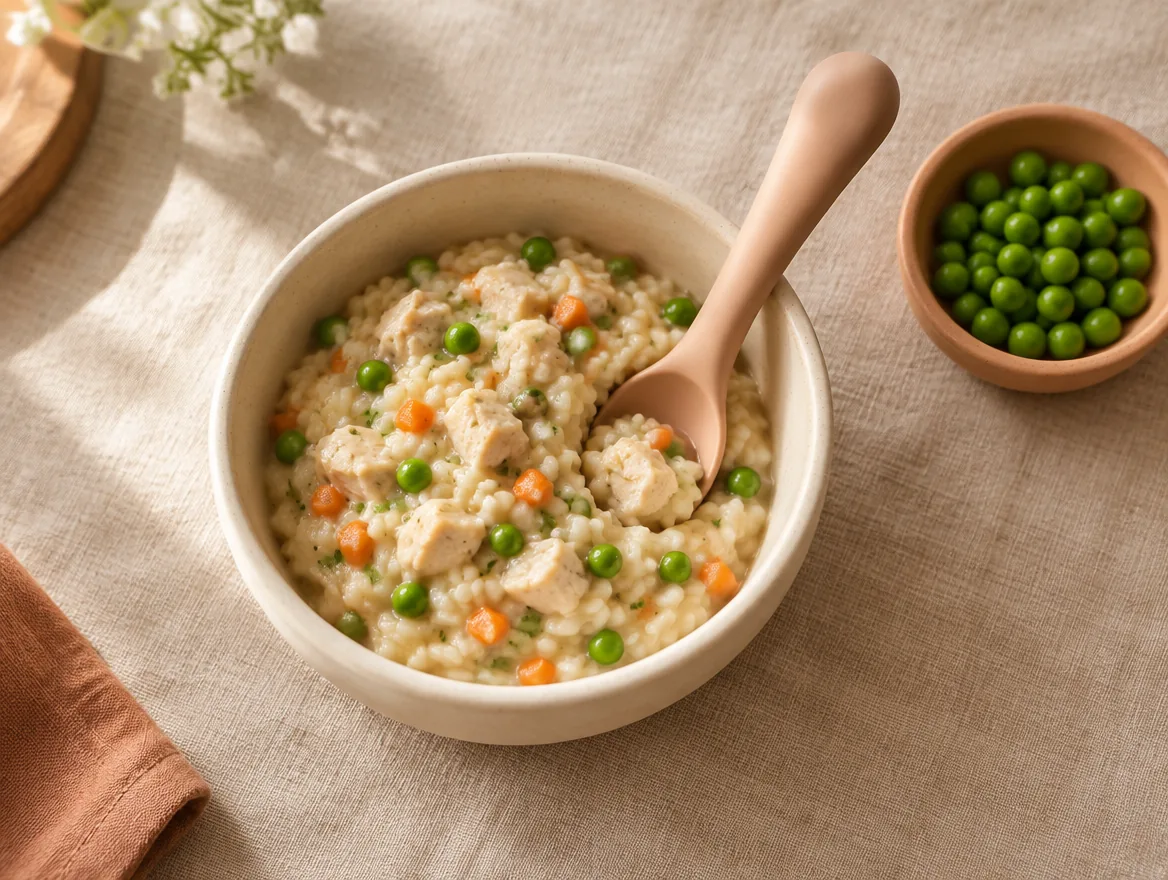
Illustration of the dish created with the help of AI.
- For babies from 10 months
- Prep 10 min · cook 25 min
- 2 to 3 baby portions
Allergens
Contains none of the 14 major allergens listed by EU and UK law (this also covers the 9 major US allergens).
Ingredients
- 4 tbsp rice, such as arborio (about 50 g / ¼ cup)
- 50 g (about 2 oz) chicken breast
- half a carrot
- 2 tbsp frozen peas
- 1 tsp olive oil
- about 300 ml (1¼ cups) water
Method
- 1Cut the chicken into small pieces and the carrot into small dice.
- 2Sauté the chicken and carrot in the olive oil for two to three minutes.
- 3Add the rice, stir, and pour in the water. Simmer over low heat for 20 minutes, stirring now and then and adding a little more water if needed.
- 4Add the peas for the last 5 minutes. The risotto is ready when the rice is soft and creamy and the chicken is cooked through.
- 5Lightly mash the peas in your baby's portion with a fork, let it cool and serve.
Rate this recipe
Click a star, or choose one with the arrow keys and press Enter.
Why mash the peas
Small, round, smooth foods like peas can slip into a baby's airway. So until at least age 4, which is the American Academy of Pediatrics' guidance, squash or cut up every small round food: mash peas with a fork, and quarter grapes and cherry tomatoes lengthwise.
No salt, still full of flavor
Stock cubes and bouillon granules are mostly salt, so leave them out of your baby's risotto. The flavor comes from the chicken, the carrot and a little olive oil. For the family, cook a bigger batch, set aside your baby's portion, then salt the rest and top it with grated parmesan.
Adapting it by age
- From 10 months: creamy risotto with mashed peas and finely chopped chicken.
- For a younger baby, from 8 months: blend everything briefly.
- From 12 months: with more vegetables and a little parmesan.
Rice as part of a varied diet
Offer rice a few times a week rather than every day, and rotate it with other grains and starches: pasta, couscous, oats and potatoes. Rice naturally contains traces of arsenic, which is one more reason to keep your baby's grains varied. For more ideas at this age, see baby food from 10 months.
Safe feeding
Always feed your baby sitting upright and never leave them alone while eating. Offer a new food in the morning or early afternoon and watch for a reaction over the next two to three days. Before 12 months, add no salt, sugar or honey. Food is best eaten straight away; if any is left, cool it quickly, keep it in the fridge until the next day at the latest, and throw away anything left in your baby's bowl. This recipe is for information and doesn't replace advice from your pediatrician or health visitor, especially if your baby has a food allergy or severe eczema.
How to tell gagging from choking and when to introduce allergens: Starting Solids: When to Begin and How to Know Your Baby Is Ready.
Keep track of what your baby tries
In the HannaH app you log every new food, the texture, how much your baby ate and how it went down. If a rash appears, you can show your pediatrician an exact list instead of trying to remember.
More meals for babies from 10 months
How many meals a day and a sample week: 10 Month Old Baby Food: Meal Ideas and Daily Menu