Recipes · breakfast
French Toast Fingers for Babies (8+ Months)
French toast (eggy bread) fingers your baby can hold: fully cooked egg, no sugar, no milk. Which bread to choose and how to cut it for babies from 8 months.
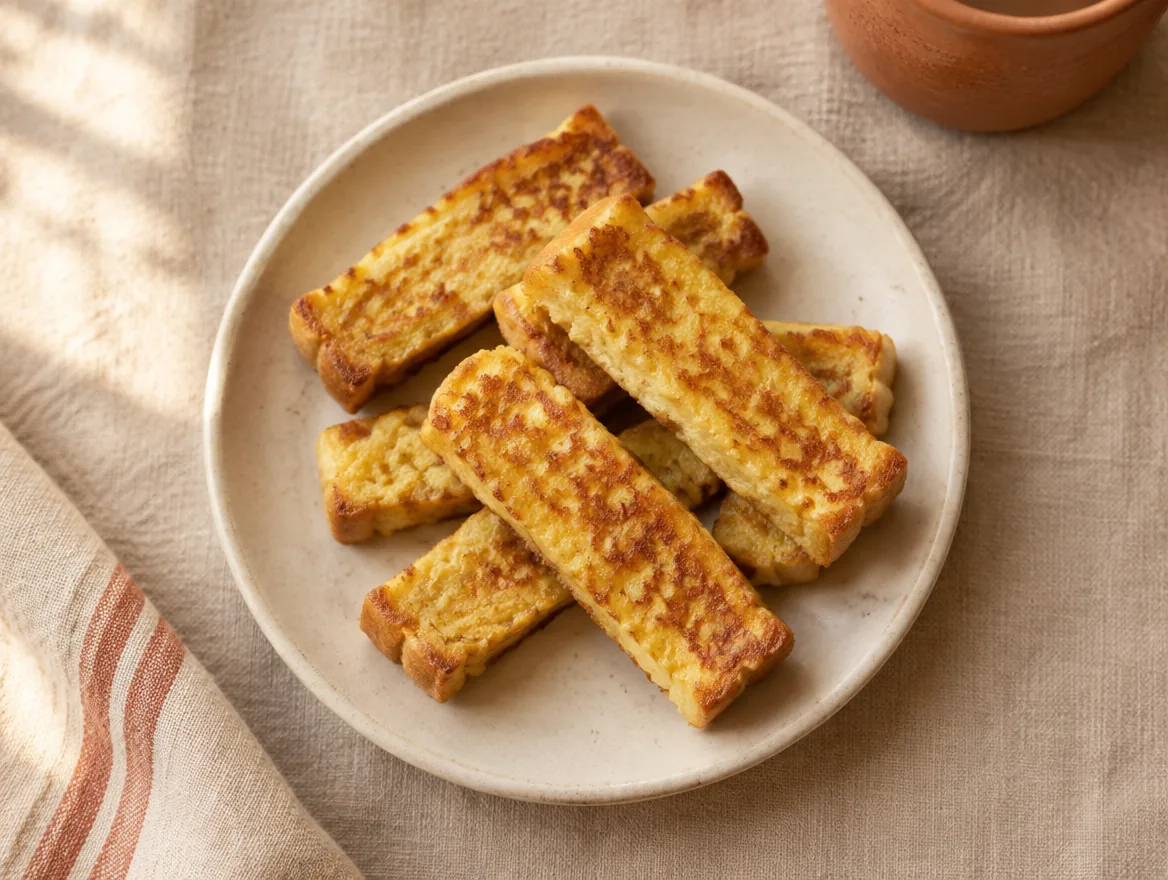
Illustration of the dish created with the help of AI.
- For babies from 8 months
- Prep 5 min · cook 6 min
- 1 to 2 baby portions
Allergens
- Glutenwheat, rye, barley, oats, spelt
- Eggeggs and egg products
Free from dairy.
Contains gluten from the bread, and egg. If you beat the egg with milk, it also contains milk. Bread with seeds may contain sesame.
Ingredients
- 1 egg
- 1 slice of bread without seeds, ideally a day old
- a pinch of cinnamon, optional
- a little oil for the pan
Method
- 1Beat the egg with a fork in a shallow dish, with a pinch of cinnamon if you like.
- 2If the crust is hard, cut it off. Lay the slice in the egg and leave it for about half a minute on each side, so it soaks up as much egg as possible.
- 3Heat a frying pan over medium heat and brush it with a little oil. Cook the slice for 2 to 3 minutes on each side, until golden. If there's egg left in the dish, cook it in the pan next to the bread.
- 4Cut into the slice and check the middle: the egg must be fully cooked, with no moist patches. If it isn't, cook it for another minute over lower heat.
- 5Let it cool and cut it into fingers about as wide as an adult's finger.
Rate this recipe
Click a star, or choose one with the arrow keys and press Enter.
Which bread to choose
French toast, known in the UK as eggy bread, is a quick breakfast your baby can eat on their own. Bread contains salt, so choose a lower-salt loaf: compare the salt per 100 g on UK labels or the sodium per serving on US labels. Pick bread without seeds or nuts, as some of them, sesame for example, are common allergens. Day-old bread soaks up the egg better and falls apart less.
Two allergens at once
French toast contains both gluten and egg. If your baby hasn't tried one of them yet, introduce it on its own first, so a reaction is easier to spot. You can offer egg as a zucchini omelette. For babies, egg must always be fully cooked, with no runny or moist parts.
Adapting it by age
- From 8 months: fingers about as wide as an adult's finger, which your baby holds in their fist.
- From 9 months: soft pieces about the size of a chickpea, which your baby picks up with their fingers.
- From 12 months: a whole slice, with fruit or yogurt.
What to serve with it
Add soft fruit: pieces of ripe pear or banana, or baked apple. Skip the sugar, honey and syrup, maple syrup included: the cinnamon is enough.
Safe feeding
Always feed your baby sitting upright and never leave them alone while eating. Offer a new food in the morning or early afternoon and watch for a reaction over the next two to three days. Before 12 months, add no salt, sugar or honey. Food is best eaten straight away; if any is left, cool it quickly, keep it in the fridge until the next day at the latest, and throw away anything left in your baby's bowl. This recipe is for information and doesn't replace advice from your pediatrician or health visitor, especially if your baby has a food allergy or severe eczema.
How to tell gagging from choking and when to introduce allergens: Starting Solids: When to Begin and How to Know Your Baby Is Ready.
Keep track of what your baby tries
In the HannaH app you log every new food, the texture, how much your baby ate and how it went down. If a rash appears, you can show your pediatrician an exact list instead of trying to remember.
More meals for babies from 8 months
How many meals a day and a sample week: 8 Month Old Baby Food: Meal Plan and Finger Foods