Recipes · by age
8 Month Old Baby Food: Meal Plan and Finger Foods
What an 8 month old eats, how to move from purees to lumps and finger foods, how many meals they need, and seven lunch ideas. No salt or sugar, allergens marked.
Around eight months, your baby is ready for more than smooth puree. Food gets thicker and lumpier, and your baby feeds themselves more and more, with their fingers. This matters, because babies who eat only blended food for too long often find lumps harder to accept later.
Texture
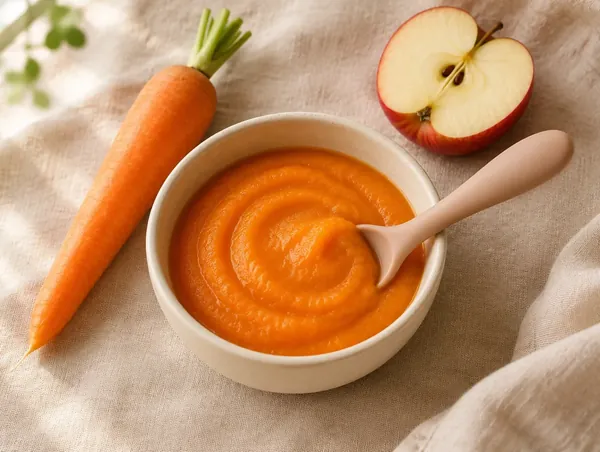
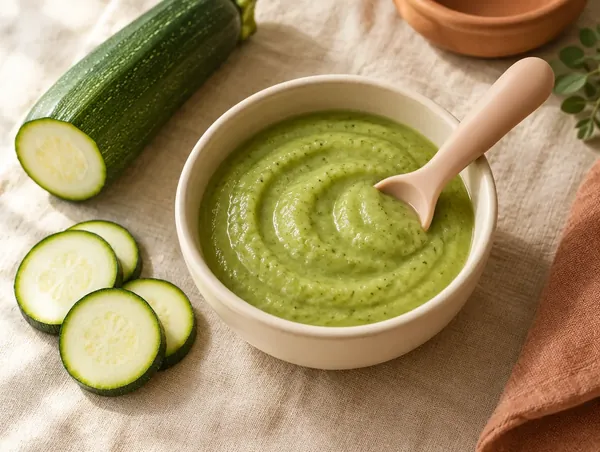
- Mashed instead of blended: mash vegetables and meat with a fork so soft lumps remain.
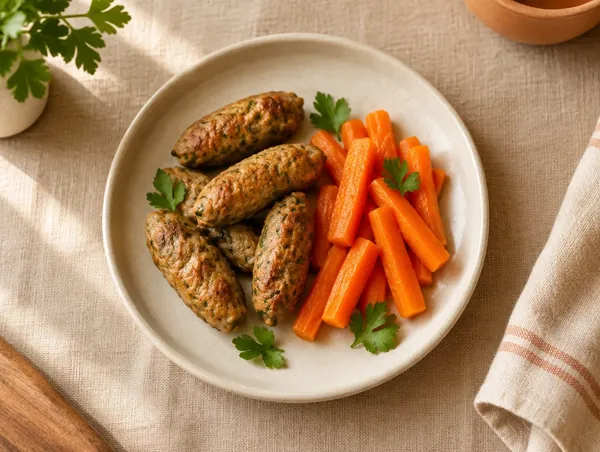
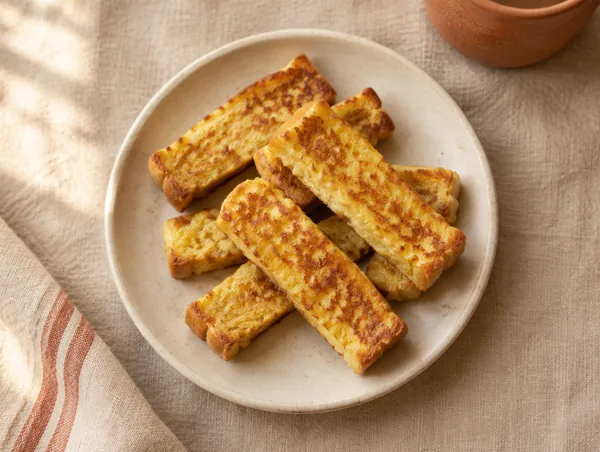
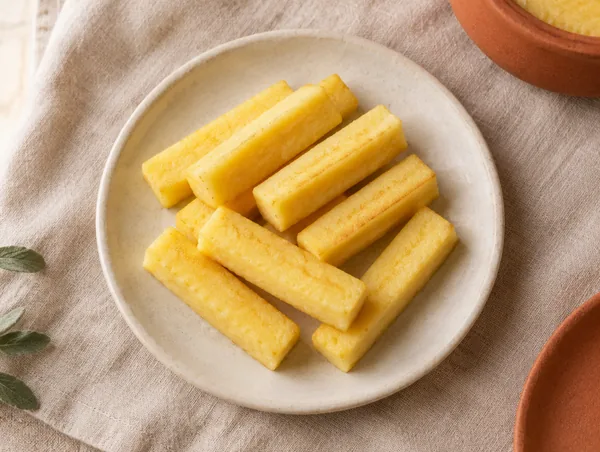
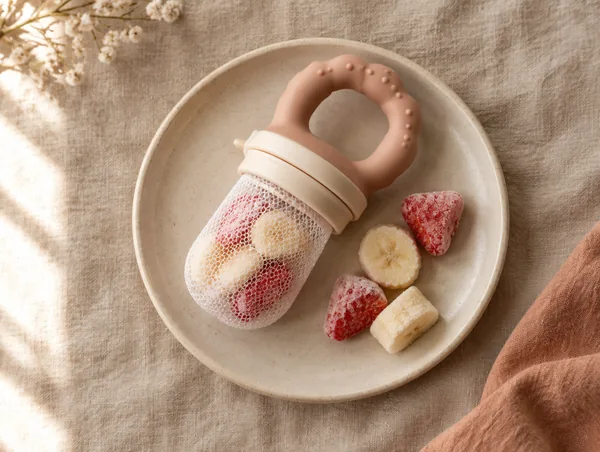
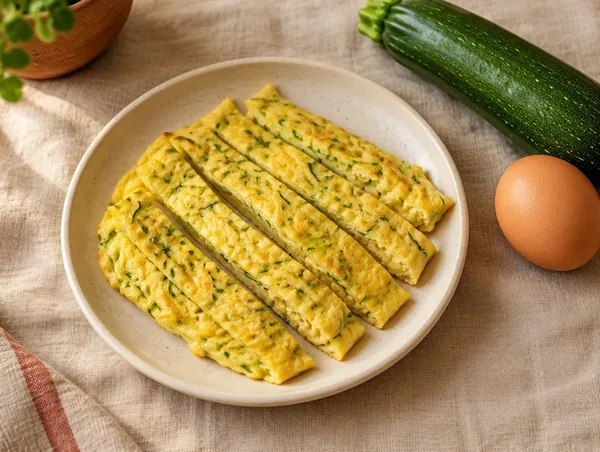
- Soft finger foods: cooked vegetable sticks, strips of omelette, soft fruit, finger-shaped meatballs.
- Around nine months: your baby starts picking food up between thumb and forefinger (the pincer grasp), so the pieces can get smaller.
When your baby coughs and goes red while eating, it's usually the gag reflex protecting them, not choking. Choking is silent. That's why your baby always eats sitting upright and never alone. We explain the difference in Starting solids.
How many meals a day
Between 6 and 8 months, the World Health Organization recommends two to three meals a day, and from 9 months three to four, plus one to two snacks. Milk is still important, but your baby now drinks a little less of it because they eat more.
A sample day
- Early morning: milk.
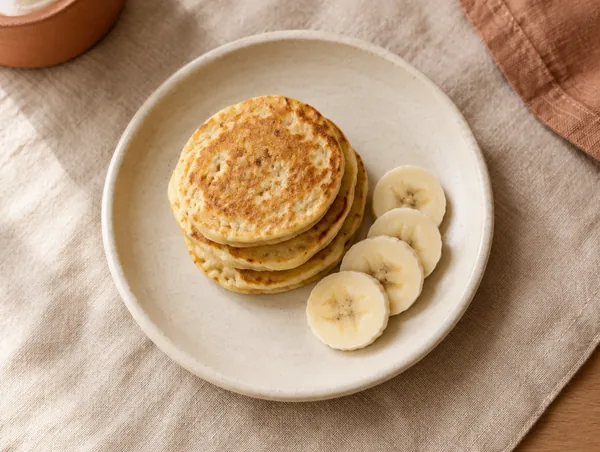
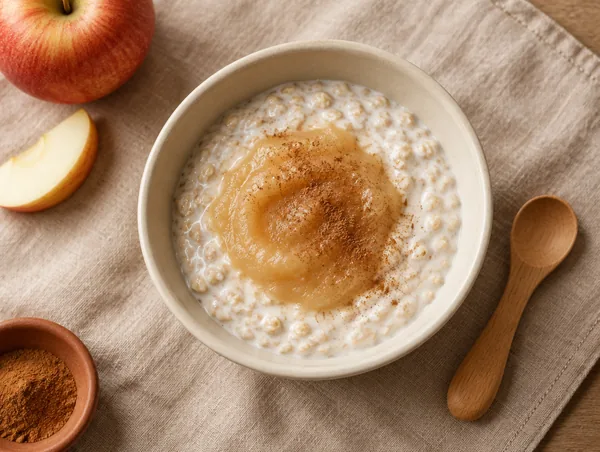
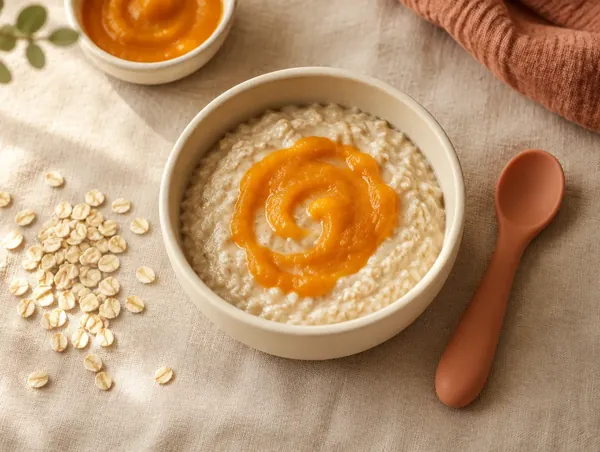
- Breakfast: oatmeal (porridge) with fruit, or zucchini (courgette) omelette.
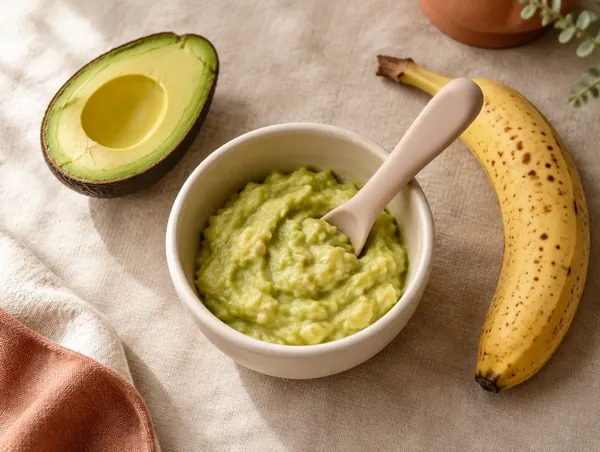
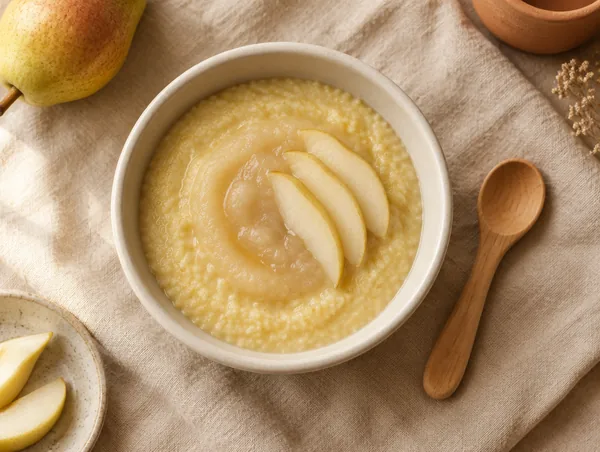
- Snack: pieces of ripe pear or avocado and banana.
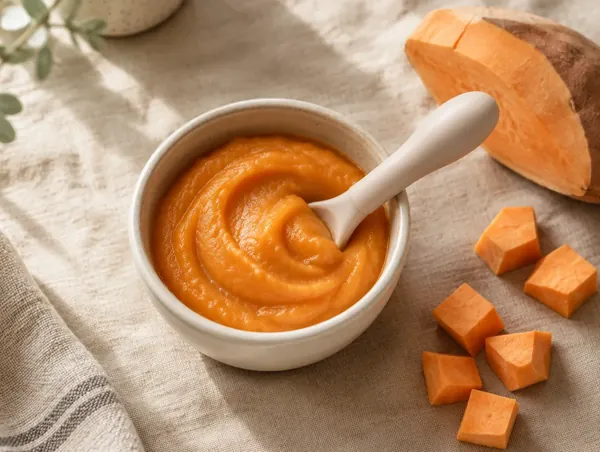
- Lunch: vegetables with meat or fish, for example baby meatballs with mashed sweet potato.
- Afternoon: milk.
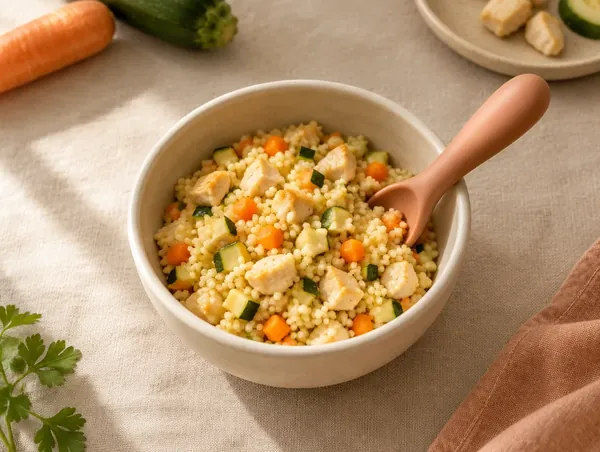
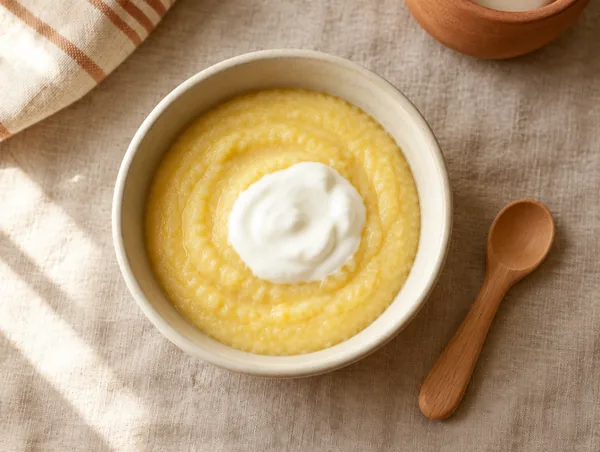
- Dinner: semolina porridge with fruit or couscous with vegetables.
- Before bed: milk.
Seven lunch ideas
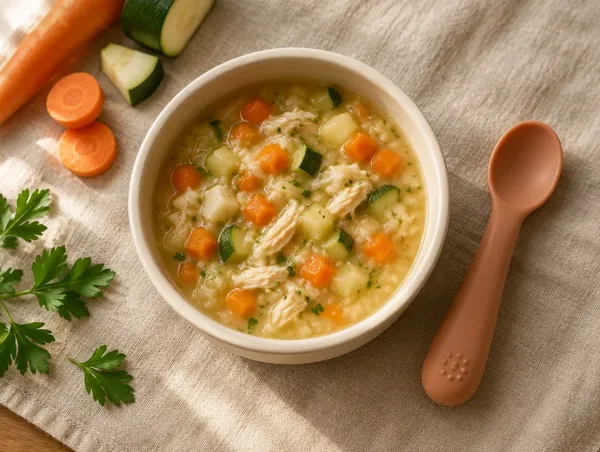
- Monday: vegetable and chicken soup, mashed
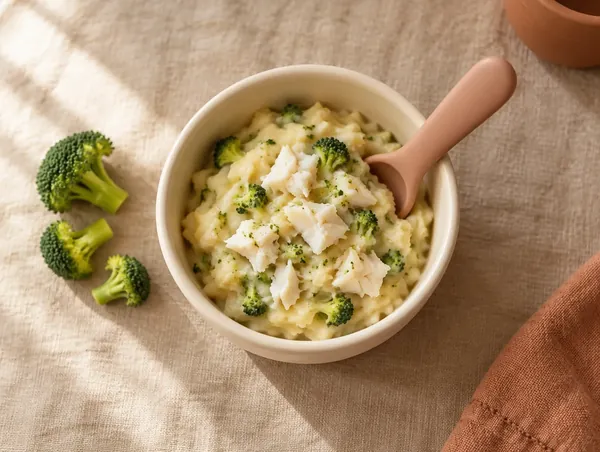
- Tuesday: white fish with potato and broccoli, with the fish in flakes
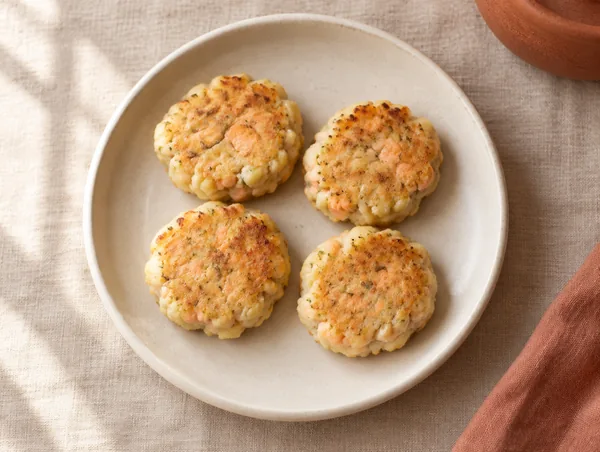
- Wednesday: baby meatballs and cooked carrot
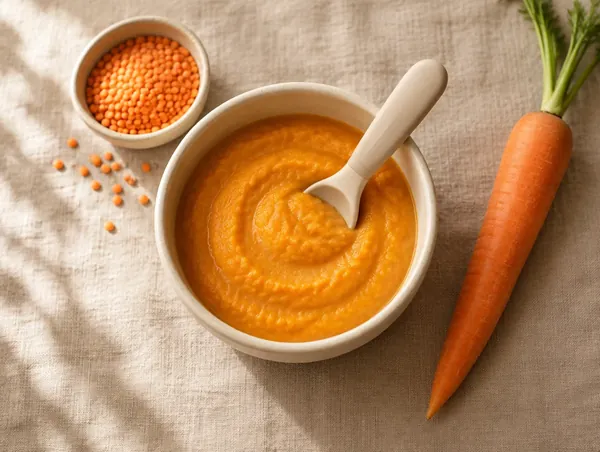
- Thursday: red lentil and carrot puree, made thicker
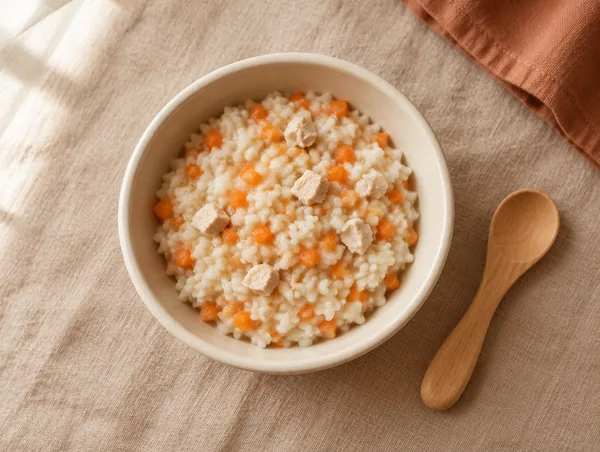
- Friday: couscous with vegetables and chicken
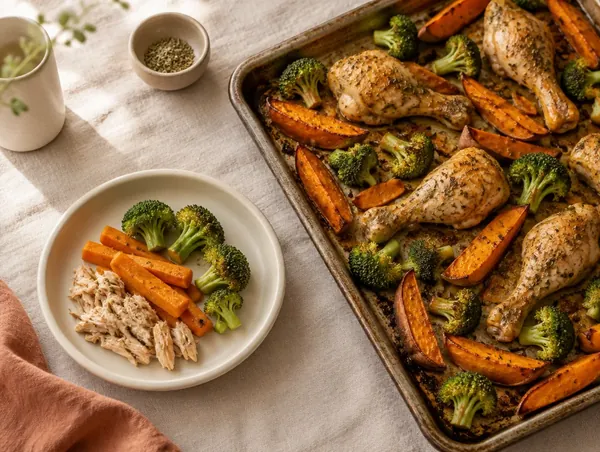
- Saturday: sheet pan chicken with sweet potato and broccoli, the same as the rest of the family
- Sunday: zucchini omelette and sweet potato puree
Snacks without sugar
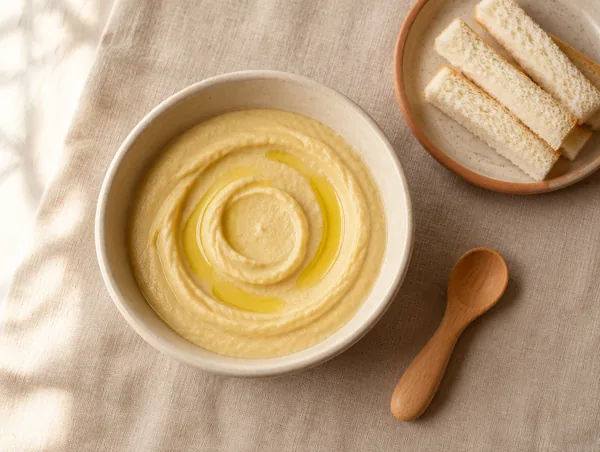
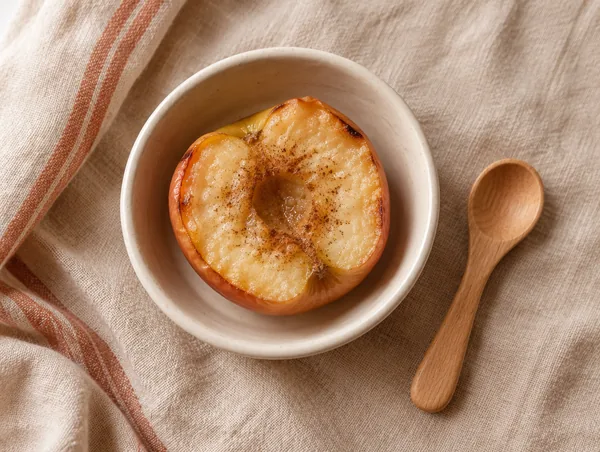
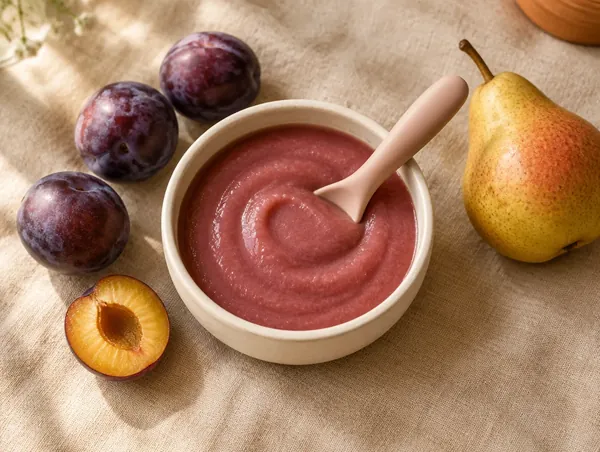
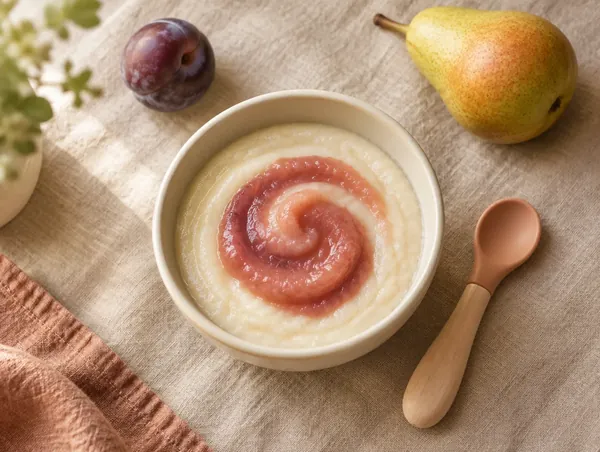
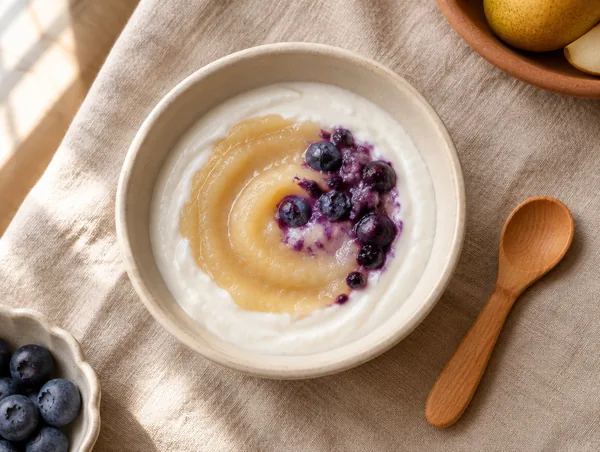
Avocado and banana, pear and plum puree, soft fruit cut into sticks, plain yogurt. Store-bought baby biscuits and snacks often contain sugar and salt, so check the label.
Advice on snacks differs between countries. The NHS in the UK says babies under 12 months don't need snacks and suggests an extra milk feed if your baby is hungry between meals, while the AAP's sample menu for 8 to 12 months includes two small snacks. Either way, a snack is a small, plain addition, not grazing all day.
Sources
- World Health Organization: Infant and young child feeding
- World Health Organization: WHO Guideline for complementary feeding of infants and young children 6-23 months of age
- ESPGHAN (European Society for Paediatric Gastroenterology, Hepatology and Nutrition): Complementary Feeding: A Position Paper by the European Society for Paediatric Gastroenterology, Hepatology, and Nutrition (ESPGHAN) Committee on Nutrition
- NHS: Weaning
- NHS: Choking and gagging on food
- American Academy of Pediatrics (HealthyChildren.org): When Can Babies Start Solid Foods? Readiness & Feeding Tips