Recipes · lunch, dinner
Salmon and Potato Cakes for Babies (8+ Months)
Soft, oven-baked salmon and potato cakes for babies who feed themselves. No salt or breadcrumbs, plus how to check for bones and when to offer them.
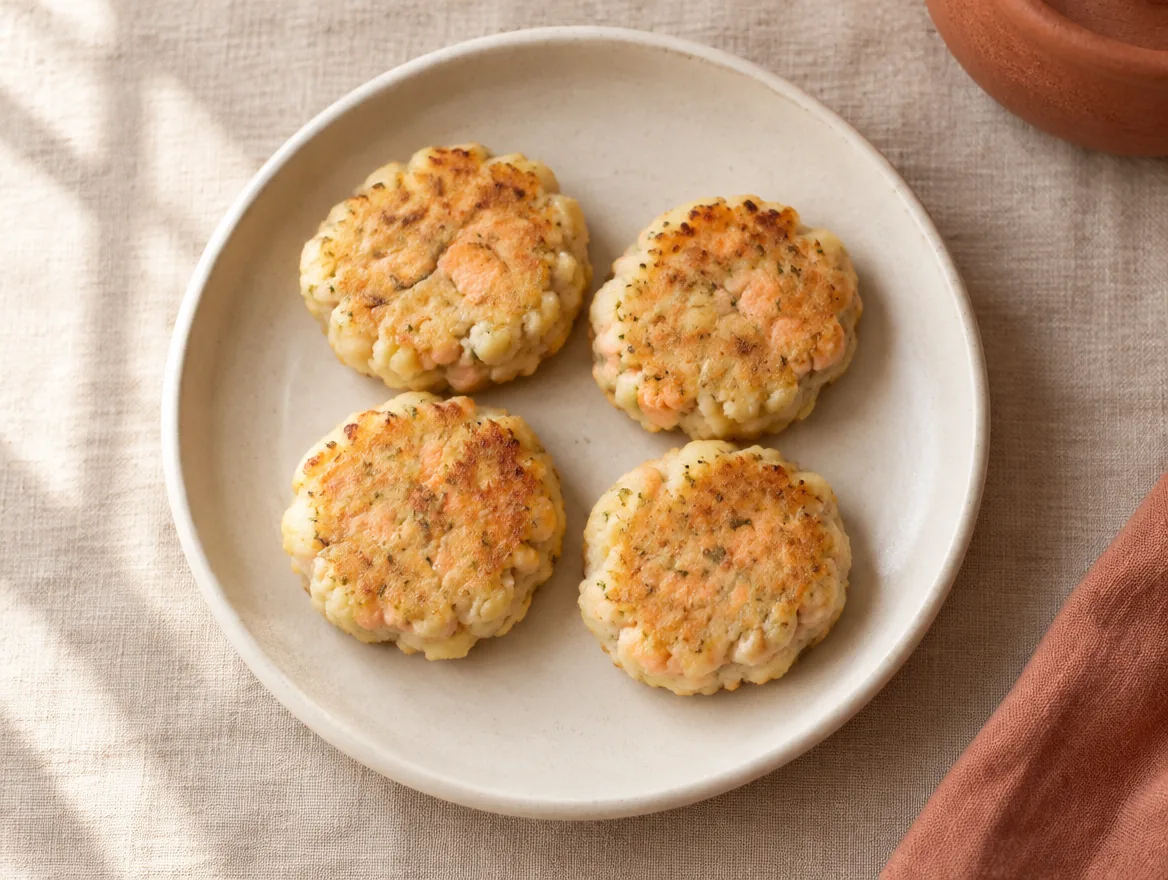
Illustration of the dish created with the help of AI.
- For babies from 8 months
- Prep 20 min · cook 35 min
- 10 to 12 small cakes
Allergens
- Fishfish and fish products
- Eggeggs and egg products
Free from dairy, gluten.
The egg holds the mixture together. If your baby hasn't tried egg yet or can't eat it, leave it out, add half a potato more and chill the mixture for 30 minutes before shaping. The cakes will be more fragile, and you can also serve them mashed.
Ingredients
- 150 g (about 5 oz) skinless salmon fillet, fresh or thawed
- 2 medium potatoes (about 300 g / 10 oz), ideally a starchy mashing variety such as russet or Maris Piper
- 1 egg
- a few sprigs of dill or parsley, finely chopped
- a little olive oil for the baking sheet
Method
- 1Preheat the oven to 200 °C (400 °F) and line a baking sheet with parchment (baking) paper.
- 2Peel the potatoes, cut them into cubes and boil for about 15 minutes, until completely soft. Drain well, return them to the hot pan for two minutes so the excess water steams off, then mash until smooth.
- 3Meanwhile, steam the salmon or poach it in a little water for 8 to 10 minutes, until it's opaque all the way to the center and breaks into flakes.
- 4Pull the salmon apart into small flakes with your fingers and check carefully for bones, even if the fillet was sold as boneless.
- 5Mix the salmon, beaten egg and dill or parsley into the mashed potato. The mixture should be soft but firm enough to shape.
- 6With wet hands, shape about ten flat, elongated cakes, roughly the size of an adult's finger, so your baby can grip them easily.
- 7Place them on the baking sheet, brush lightly with oil and bake for about 20 minutes, turning them with a wide spatula after 10 minutes. They're done when they're lightly golden and firm to the touch on the outside and cooked all the way through.
- 8Let them cool before serving. The cakes stay soft enough for your baby to mash with their gums.
Rate this recipe
Click a star, or choose one with the arrow keys and press Enter.
Before the first cakes
These cakes contain two common allergens, fish and egg. Offer them once your baby has already eaten both separately with no problems; otherwise, if there were a reaction, it would be hard to tell which food caused it. (Our guide to starting solids explains how to introduce allergens.) For a first taste of fish, try white fish with potato and broccoli. The egg here is fully baked, and eggs for babies should always be well cooked.
Salmon and bones
Use a fresh or frozen salmon fillet. Don't give your baby smoked salmon, which is very salty, and skip canned salmon too, as it's usually packed with added salt. Salmon is an oily fish, so alternate it with white fish such as cod or hake.
Even fillets sold as "boneless" sometimes contain a stray bone. So after cooking, always pull the fish apart with your fingers and check it, flake by flake.
Adapting it by age
- From 8 months: elongated cakes your baby holds in their fist, or mash a cake with a fork and offer it from a spoon.
- From 10 months: smaller cakes, cut into soft pieces your baby picks up with their fingers.
- From 12 months: with cooked vegetables and a spoonful of plain yogurt mixed with dill.
For the whole family
Double the mixture and set aside your baby's portion before seasoning. Salt the rest and add a little grated lemon zest. For crispy grown-up cakes, roll them in breadcrumbs before baking.
Safe feeding
Always feed your baby sitting upright and never leave them alone while eating. Offer a new food in the morning or early afternoon and watch for a reaction over the next two to three days. Before 12 months, add no salt, sugar or honey. Food is best eaten straight away; if any is left, cool it quickly, keep it in the fridge until the next day at the latest, and throw away anything left in your baby's bowl. This recipe is for information and doesn't replace advice from your pediatrician or health visitor, especially if your baby has a food allergy or severe eczema.
How to tell gagging from choking and when to introduce allergens: Starting Solids: When to Begin and How to Know Your Baby Is Ready.
Keep track of what your baby tries
In the HannaH app you log every new food, the texture, how much your baby ate and how it went down. If a rash appears, you can show your pediatrician an exact list instead of trying to remember.
More meals for babies from 8 months
How many meals a day and a sample week: 8 Month Old Baby Food: Meal Plan and Finger Foods