Recipes · breakfast, dinner
Scrambled Eggs with Spinach for Toddlers (12+ Months)
Two scrambled eggs with a handful of baby spinach, cooked all the way through with nothing runny. A no-salt, dairy-free breakfast or dinner in ten minutes.
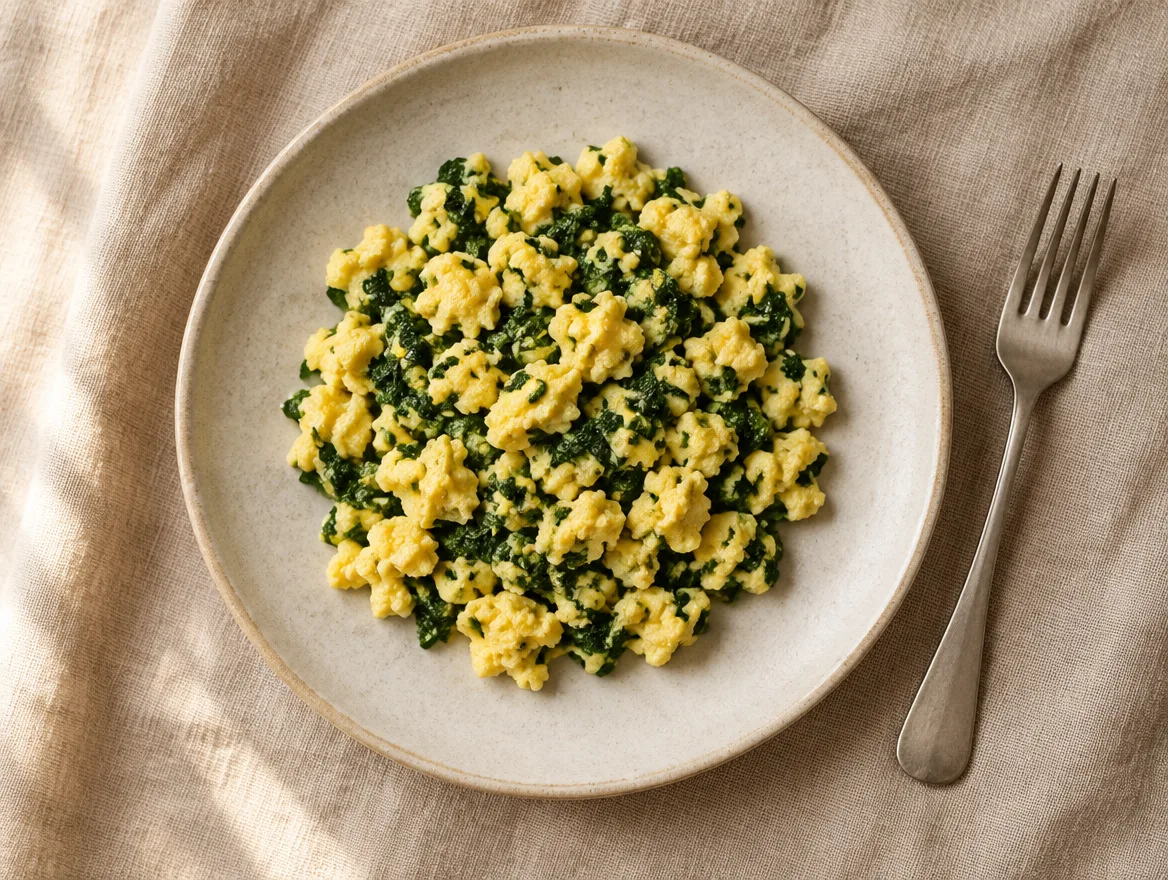
Illustration of the dish created with the help of AI.
- For toddlers from 12 months
- Prep 5 min · cook 6 min
- Very easy
- 2 toddler portions
- Family meal
Allergens
- Eggeggs and egg products
Free from dairy, gluten.
One meal for the whole family
Cook the scrambled eggs without salt. Take out your child's portion, then season the rest with salt and pepper. For the whole family, double the quantities.
Ingredients
- 2 eggs
- 1 handful of fresh baby spinach (about 40 g / 1½ oz)
- 1 tsp olive oil
Method
- 1Wash the spinach in several changes of water, pull off the thicker stems and chop the leaves very finely.
- 2Heat the oil in a small frying pan over medium heat. Add the spinach and sauté it for 1 to 2 minutes, until it wilts and the water it releases has evaporated.
- 3Beat the eggs with a fork in a cup and pour them over the spinach.
- 4Cook for 3 to 4 minutes, stirring constantly with a spatula and breaking the eggs up into curds. The scrambled eggs are done when all the curds are firm and matte, with no shiny, runny parts.
- 5Break them up with the spatula into bite-size pieces and let them cool before serving.
Nutrition per 100 g
- Energy
- 136 kcal
- Protein
- 9.7 g
- Fat
- 10.1 g
- Carbohydrate
- 1.4 g
- Fiber
- 0.6 g
- Iron
- 2 mg
- Calcium
- 65 mg
Approximate, calculated from the raw ingredients using USDA FoodData Central. Actual values depend on your ingredients and how you cook them.
Rate this recipe
Click a star, or choose one with the arrow keys and press Enter.
Fully cooked
Scrambled eggs for adults often stay creamy and moist. A young child's egg must be fully cooked, so give it a minute longer than your own, until nothing runny is left. If your child hasn't tried egg yet, offer a small piece in the morning the first time and watch for a reaction over the next two to three days. With severe eczema or a known food allergy, ask your pediatrician or GP first.
How much spinach, and why from 12 months
Spinach naturally contains nitrates, so it's best left out in the first year, and young children get it in small amounts, not every day. A handful of leaves for two eggs is plenty. Serve the eggs freshly made, don't leave them at room temperature, and skip spinach while your child has a gut infection with diarrhea. Chop the leaves finely: a large, wilted leaf can stick to the roof of the mouth.
Adapting it by age
- From 12 months: small pieces your child picks up with their fingers or eats from a spoon, with a slice of soft bread, which contains gluten.
- From 2 years: scrambled eggs as the family eats them, but still fully cooked.
Safe feeding
Always feed your baby sitting upright and never leave them alone while eating. Offer a new food in the morning or early afternoon and watch for a reaction over the next two to three days. Before 12 months, add no salt, sugar or honey. Food is best eaten straight away; if any is left, cool it quickly, keep it in the fridge until the next day at the latest, and throw away anything left in your baby's bowl. This recipe is for information and doesn't replace advice from your pediatrician or health visitor, especially if your baby has a food allergy or severe eczema.
How to tell gagging from choking and when to introduce allergens: Starting Solids: When to Begin and How to Know Your Baby Is Ready.
Keep track of what your baby tries
In the HannaH app you log every new food, the texture, how much your baby ate and how it went down. If a rash appears, you can show your pediatrician an exact list instead of trying to remember.
More meals for 1 year olds
How many meals a day and a sample week: Toddler Food at 12 Months: What a 1 Year Old Eats
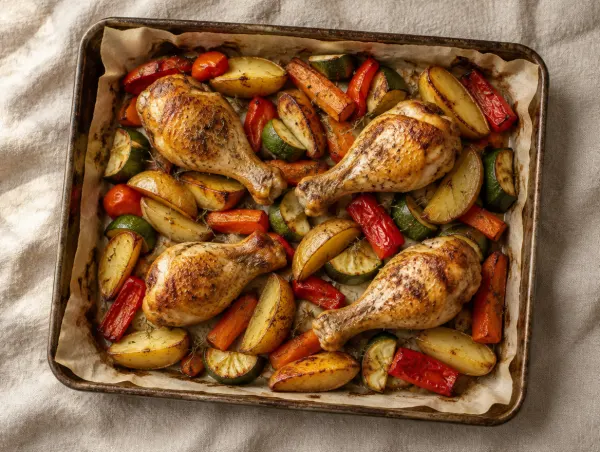
12 mo+ · lunch · dinner · 65 min · Family meal
Sheet Pan Chicken Drumsticks with Vegetables for Toddlers
Free from the 14 major allergens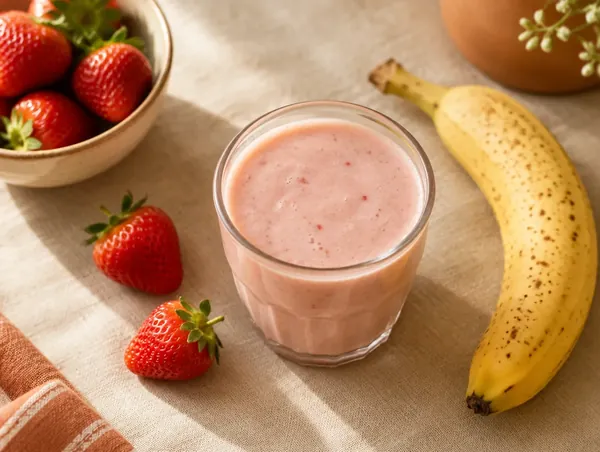
12 mo+ · breakfast · snack · 5 min
Strawberry Banana Smoothie with Milk for Toddlers
Milk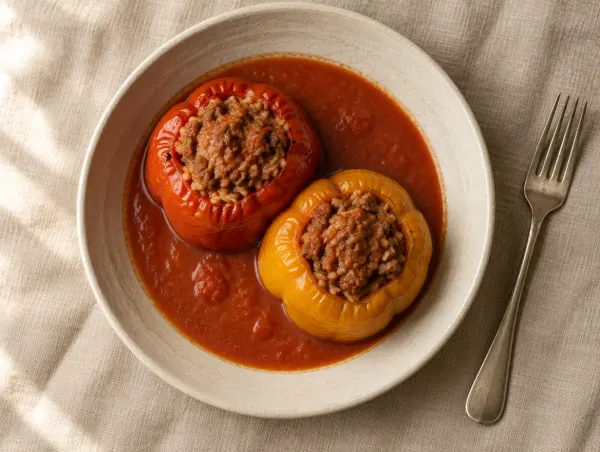
12 mo+ · lunch · dinner · 85 min · Family meal