Recipes · by age
Baby Food for a 6 Month Old: First Foods, Menu and Recipes
What a 6 month old can eat, how many meals they need and a sample menu for the first three weeks of solids. No-salt, no-sugar recipes with allergens clearly marked.
Starting solids (weaning) doesn't replace milk. It's practice: new flavors, the spoon, swallowing thicker food. Until the first birthday, milk, whether breast milk or formula, stays the main source of nutrition. How to tell your baby is ready is covered in Starting solids: when to begin.
How many meals a day
- The first week or two: one meal a day, at first just a few teaspoons. The best time is when your baby is neither too hungry nor too tired, for example an hour after a milk feed.
- By the end of the seventh month: gradually two to three meals a day, as the World Health Organization recommends.
- Milk still on demand. Solids add to it, they don't replace it.
Your baby decides how much to eat. Turning the head away, closing the mouth or starting to play with the food means they're done. Don't coax in one more spoonful.
What can a 6 month old eat
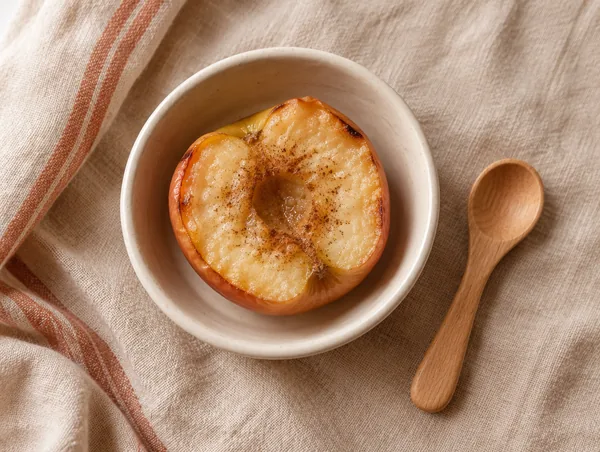
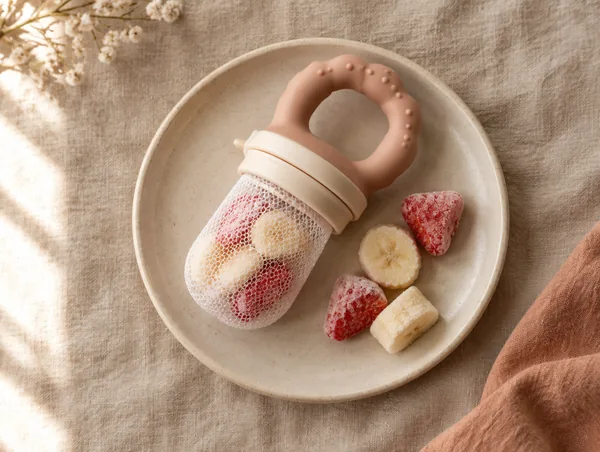
- Vegetables and fruit: zucchini (courgette), sweet potato, carrot, potato, broccoli, pear, apple, plum, banana, avocado. Offer vegetables that aren't sweet just as often as fruit.
- Iron-rich foods, from the first weeks: meat, red lentils, egg and fish. Around six months, the iron stores your baby was born with start to run low.
- Grains: oats, wheat semolina (similar to cream of wheat), rice. Gluten is introduced gradually, in small amounts.
- Common allergens, early and one at a time: egg, fish, yogurt, smooth peanut butter thinned into a puree. Offer a new food in the morning or early afternoon and watch for a reaction over the next two to three days. If your baby has severe eczema or a known food allergy, talk to your pediatrician before you start.
What not to give yet
- Salt, sugar and honey. No honey at all before the first birthday, because it can cause infant botulism.
- Cow's milk as a drink. It's fine in cooking, for example in semolina porridge.
- Whole nuts, whole grapes and other hard or round foods, because of the choking risk.
- Raw or undercooked eggs, raw meat and fish, unpasteurized cheese.
- Juice and sweetened drinks. With meals, offer a few sips of water from an open cup.
Sample menu for the first three weeks
Introduce a new food every two to three days, so you can easily see how your baby handles it. Once your baby knows a food, it stays on the menu and can be combined with the others.
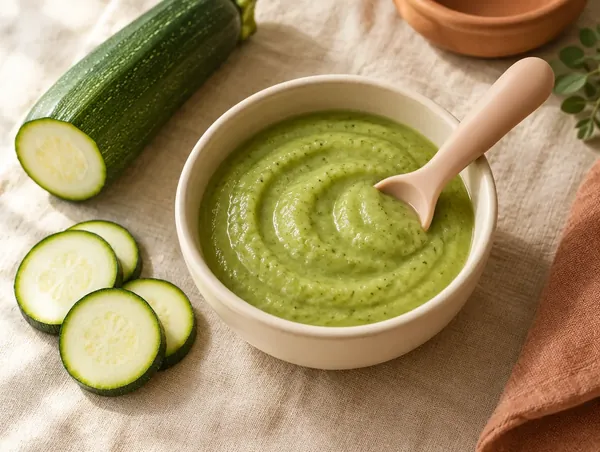
- Days 1 and 2: zucchini puree
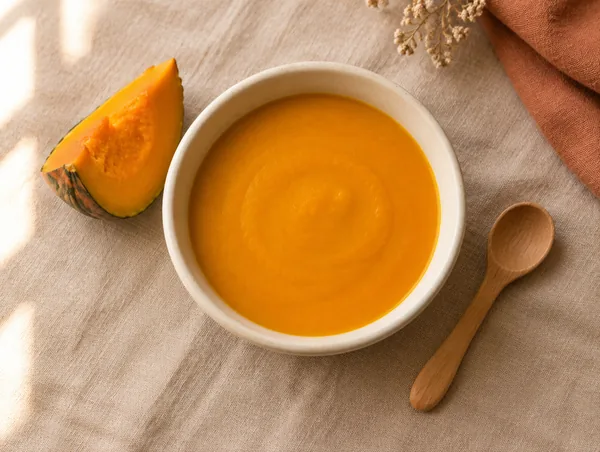
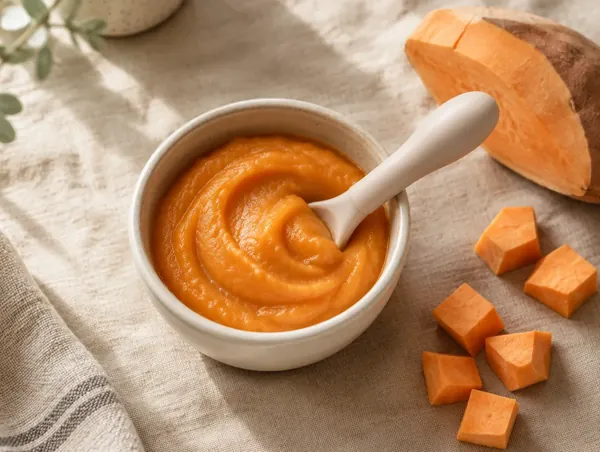
- Days 3 and 4: sweet potato puree
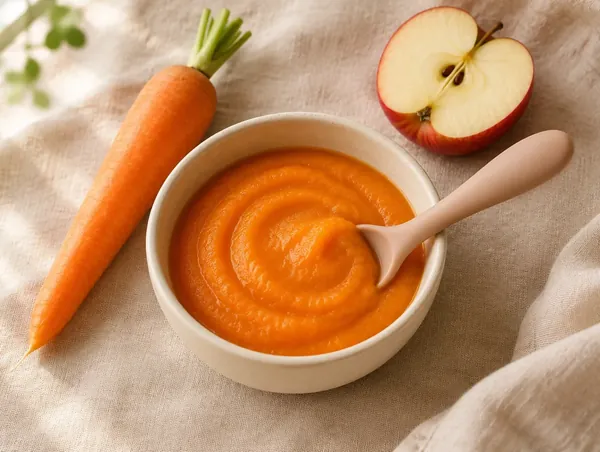
- Days 5 and 6: carrot and apple puree
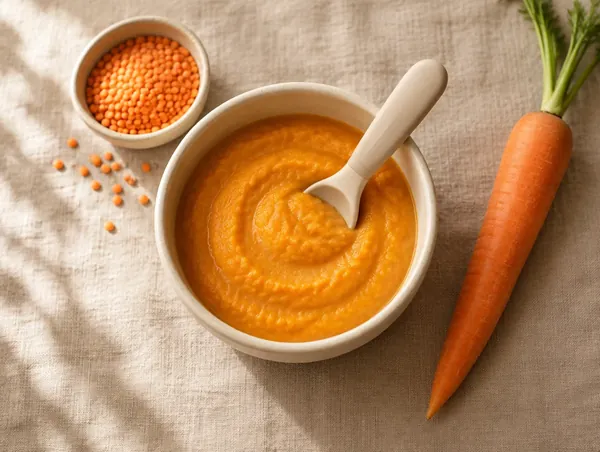
- Days 7 and 8: red lentil and carrot puree
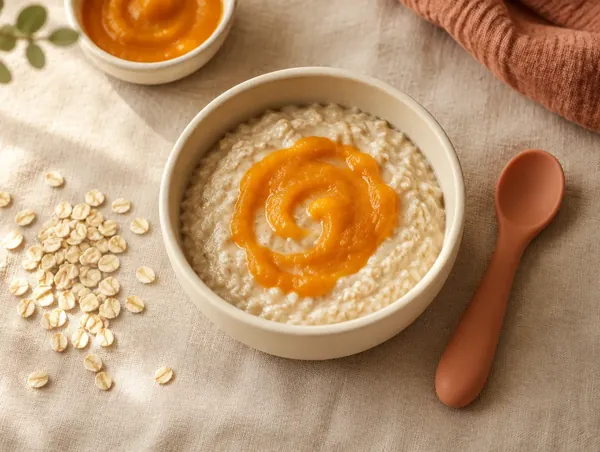
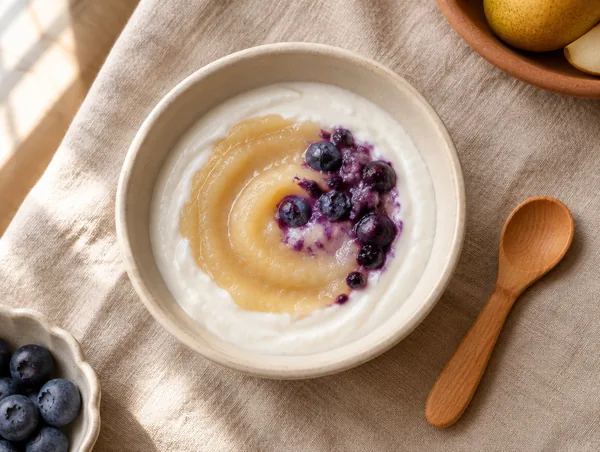
- Days 9 and 10: oatmeal (porridge) with fruit puree, the first gluten
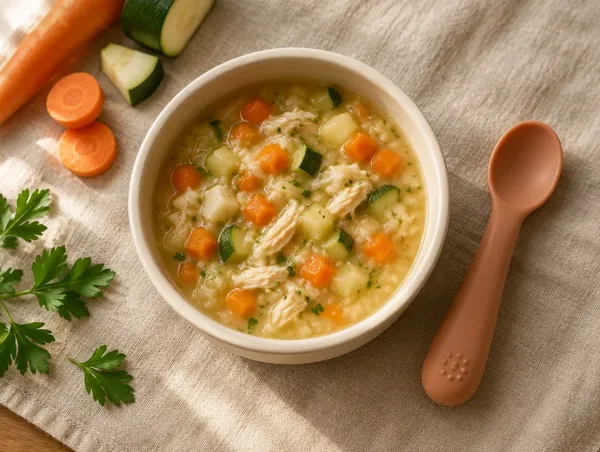
- Days 11 and 12: vegetable and chicken soup, the first meat
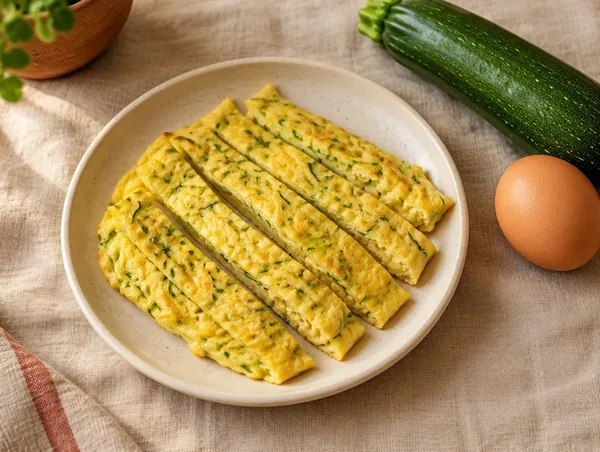
- Days 13 and 14: zucchini omelette, the first egg
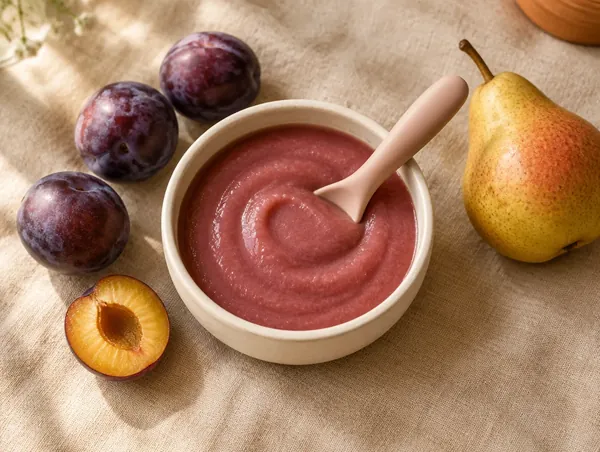
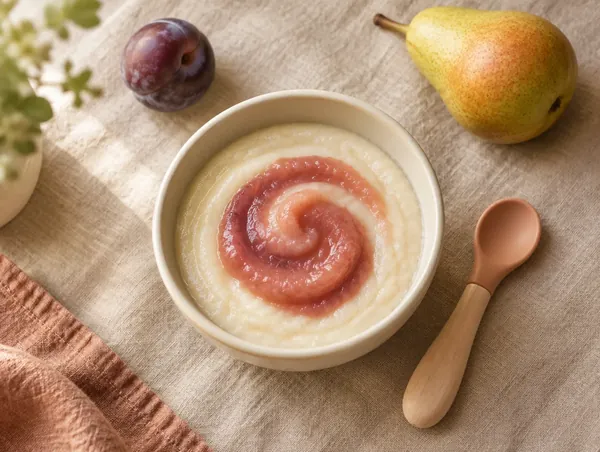
- Days 15 and 16: pear and plum puree
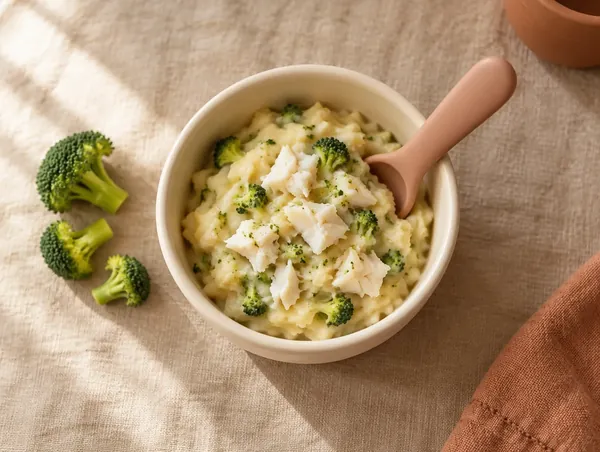
- Days 17 and 18: white fish with potato and broccoli, the first fish
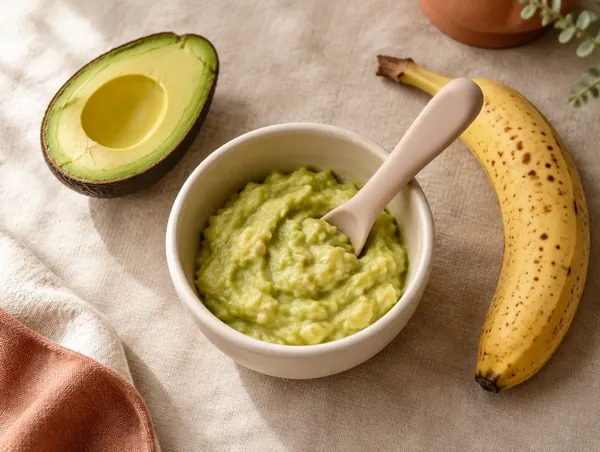
- Days 19 to 21: avocado and banana, then combinations of foods your baby already knows
The order isn't a rule. What matters is that allergens come in one at a time and that meat, egg or lentils arrive in the first few weeks.
A sample day around seven months
- Early morning: milk.
- Breakfast: oatmeal with fruit.
- Mid-morning: milk.
- Lunch: vegetables with meat, fish or lentils, for example vegetable and chicken soup.
- Afternoon: milk and, if your baby is hungry, a little fruit.
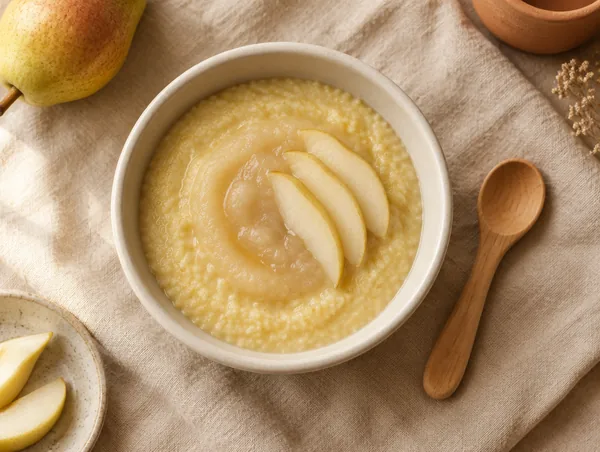
- Evening: semolina porridge with fruit or just milk.
When your baby wakes at night, keep offering milk. At this age, solids don't replace night feeds.
Sources
- World Health Organization: Infant and young child feeding
- World Health Organization: WHO Guideline for complementary feeding of infants and young children 6-23 months of age
- ESPGHAN (European Society for Paediatric Gastroenterology, Hepatology and Nutrition): Complementary Feeding: A Position Paper by the European Society for Paediatric Gastroenterology, Hepatology, and Nutrition (ESPGHAN) Committee on Nutrition
- NHS: Weaning
- NHS: Introducing foods that could trigger an allergic reaction
- NHS: Foods and drinks to avoid
- American Academy of Pediatrics (HealthyChildren.org): When Can Babies Start Solid Foods? Readiness & Feeding Tips