Recipes · lunch, dinner
Beef and Vegetable Puree for Babies (6+ Months)
First meat for starting solids: beef cooked until tender and blended with potato and carrot into a smooth puree. A source of iron, with no salt or allergens.
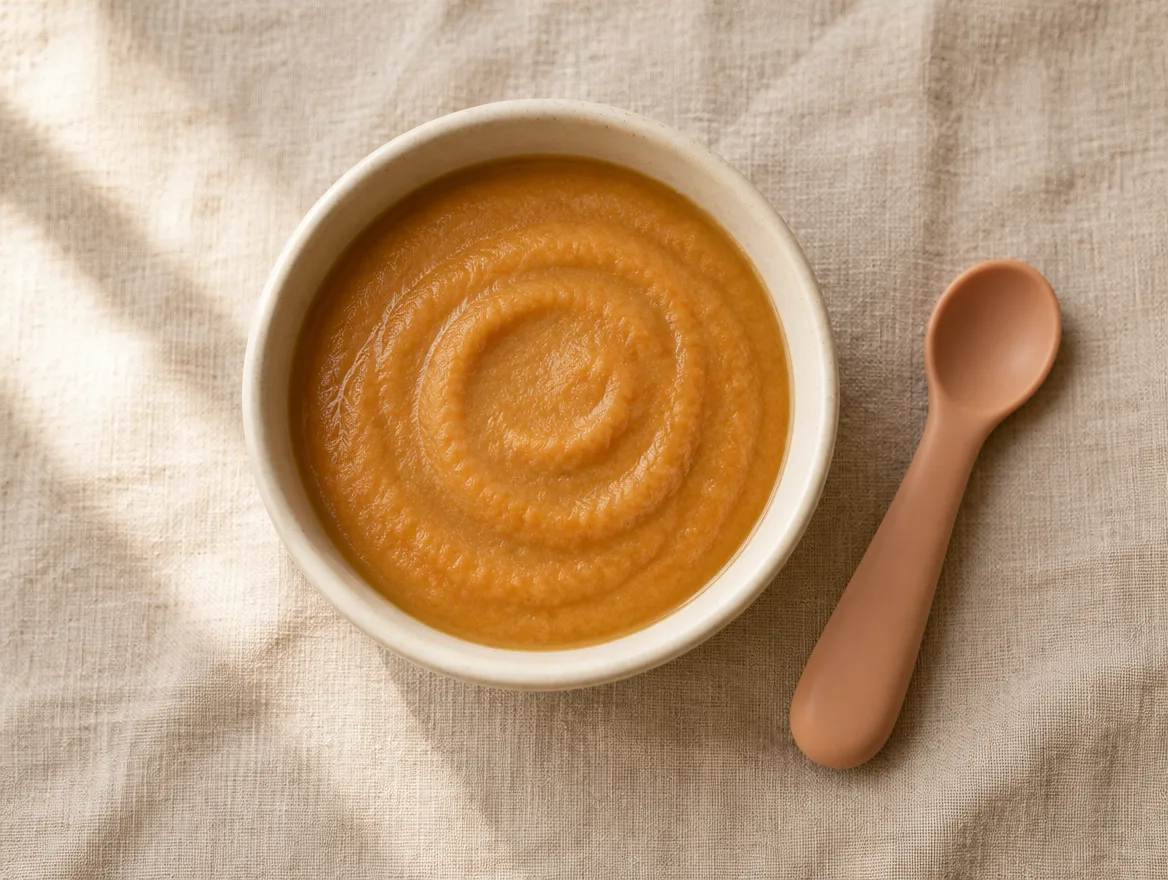
Illustration of the dish created with the help of AI.
- For babies from 6 months
- Prep 10 min · cook 60 min
- Very easy
- 4 baby portions
Allergens
Contains none of the 14 major allergens listed by EU and UK law (this also covers the 9 major US allergens).
Ingredients
- 100 g (about 3½ oz) lean beef, such as top round (topside) or rump
- 1 medium potato (about 150 g / 5 oz)
- 1 carrot (about 80 g / 3 oz)
- 1 tsp olive oil
- about 500 ml (2 cups) water
Method
- 1Trim the sinew and fat off the meat and cut it into cubes of about 1 cm (a scant ½ inch), across the grain. That makes it easier to blend later.
- 2Put the meat in a small saucepan with the water, bring to a boil and skim off the foam with a spoon. Lower the heat, cover and cook for 40 minutes. If the water drops below the level of the meat, top it up with hot water.
- 3Peel the potato and carrot, cut them into cubes and add them to the meat. Cook for another 15 to 20 minutes. It's done when the vegetables fall apart under a fork, and a cube of meat pulls apart into fibers and is gray inside, with no pink.
- 4Drain, saving the broth. Add the olive oil and about 100 ml (a scant ½ cup) of the broth to the meat and vegetables and blend with an immersion (stick) blender for at least a minute. The puree is ready when you rub it between your fingers and can't feel any fibers.
- 5Thin it with the broth to the thickness you want. Let it cool and check the temperature before serving.
Nutrition per 100 g
- Energy
- 75 kcal
- Protein
- 5.6 g
- Fat
- 2.9 g
- Carbohydrate
- 6.5 g
- Fiber
- 1 g
- Iron
- 0.7 mg
- Calcium
- 14 mg
Approximate, calculated from the raw ingredients using USDA FoodData Central. Actual values depend on your ingredients and how you cook them.
Rate this recipe
Click a star, or choose one with the arrow keys and press Enter.
Why meat right from the start
From the start of solids, your baby needs iron from food. The body absorbs it better from red meat than from plant foods, so there's no need to leave beef until the end of the first year. A small amount is enough: one portion of this puree has about 25 g (just under 1 oz) of meat.
Adapting it by age
- From 6 months: a completely smooth puree, with no fibers.
- From 8 months: mash the vegetables with a fork, and keep blending the meat or chop it very finely.
- From 10 months: shred the meat into short, thin strands and cut the vegetables into small cubes.
Variations
You can swap the potato for sweet potato, and the carrot for zucchini (courgette) or pumpkin, which go in for the last ten minutes. The same method works for veal. Chicken or turkey breast, cut into cubes, cooks together with the vegetables for 20 minutes in total, until it's white inside.
Safe feeding
Always feed your baby sitting upright and never leave them alone while eating. Offer a new food in the morning or early afternoon and watch for a reaction over the next two to three days. Before 12 months, add no salt, sugar or honey. Food is best eaten straight away; if any is left, cool it quickly, keep it in the fridge until the next day at the latest, and throw away anything left in your baby's bowl. This recipe is for information and doesn't replace advice from your pediatrician or health visitor, especially if your baby has a food allergy or severe eczema.
How to tell gagging from choking and when to introduce allergens: Starting Solids: When to Begin and How to Know Your Baby Is Ready.
Keep track of what your baby tries
In the HannaH app you log every new food, the texture, how much your baby ate and how it went down. If a rash appears, you can show your pediatrician an exact list instead of trying to remember.
More meals for babies from 6 months
How many meals a day and a sample week: Baby Food for a 6 Month Old: First Foods, Menu and Recipes