Recipes · snack
Frozen Fruit in a Mesh Feeder for Teething (6+ Months)
Chilled or briefly frozen soft fruit in a mesh feeder for a teething baby. Which fruit to choose, how to freeze it, and why ice must never go straight on the gums.
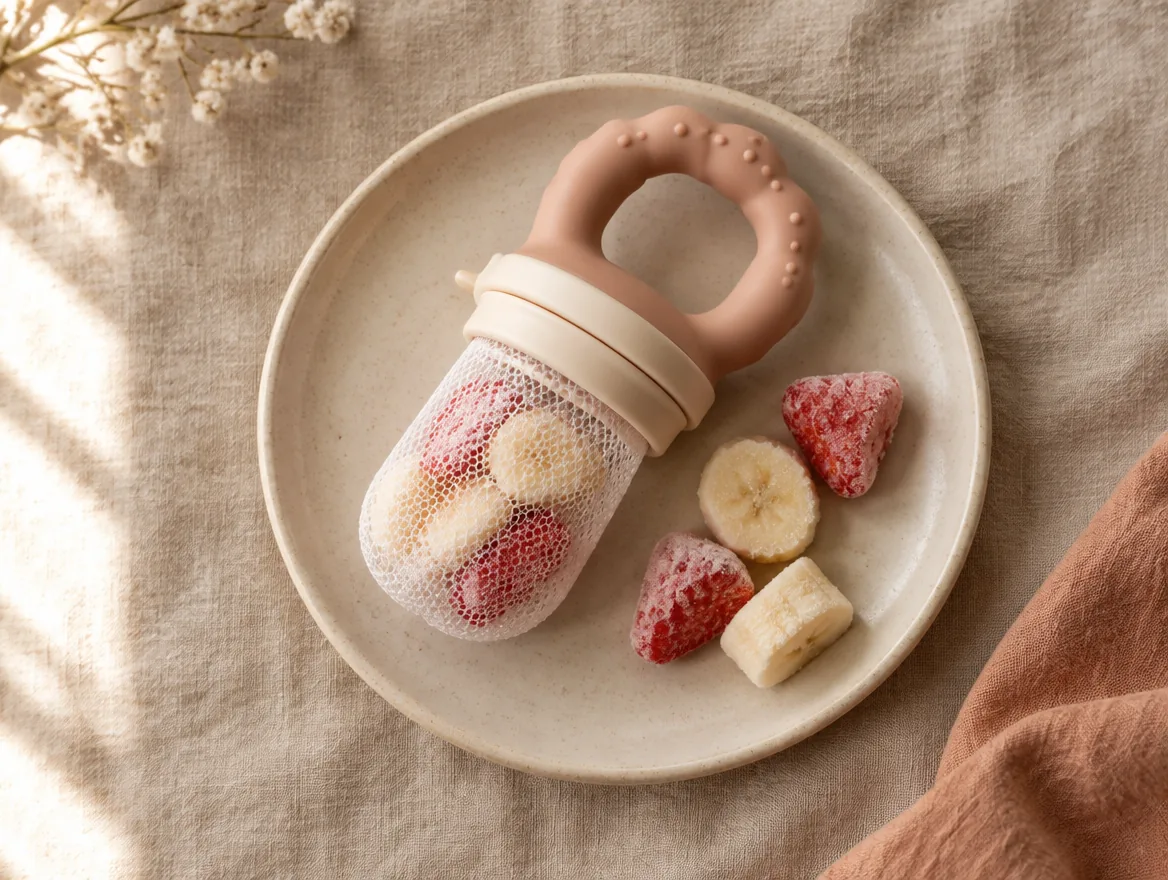
Illustration of the dish created with the help of AI.
- For babies from 6 months
- Prep 5 min · cook 0 min
- 1 mesh feeder
Allergens
Contains none of the 14 major allergens listed by EU and UK law (this also covers the 9 major US allergens).
Ingredients
- a few pieces of soft, ripe fruit: banana, pear, strawberry or watermelon
- optional: a cube of frozen breast milk or fruit puree
Method
- 1Wash the fruit, peel the banana and pear, and remove the seeds from the watermelon. Cut the fruit into pieces that fit inside a mesh feeder (also sold as a fresh food feeder) or a silicone feeder.
- 2For chilled fruit, put the pieces in the fridge for half an hour. For frozen fruit, spread them on a plate so they don't touch and freeze for an hour or two. Freeze the fruit, not the feeder, unless the manufacturer clearly says the feeder can go in the freezer.
- 3Leave frozen fruit at room temperature for a few minutes before use, so it softens slightly.
- 4Put the fruit in the feeder, close it firmly and give it to your baby while they sit upright. Stay with your baby the whole time.
- 5After use, take the feeder apart and wash it straight away. Check the mesh before every use, and replace it if it is torn or worn.
Rate this recipe
Click a star, or choose one with the arrow keys and press Enter.
Why cold fruit
When teeth are coming in, many babies want to chew on everything, and cold often feels good on their gums. The mesh lets juice and mushy fruit through while larger pieces stay inside, so your baby can gnaw and suck on the fruit by themselves. It's a handy snack for days when they turn away from the spoon.
Chilled or frozen
For the first tries, fruit from the fridge is enough. Frozen fruit is colder but also harder, so always let it soften for a few minutes. Nothing frozen hard should go straight onto your baby's gums, because it can injure them. That's also why a teething ring should be chilled, not frozen, as explained in Teething: real symptoms, myths and what actually helps.
Breast milk or puree cubes
You can freeze breast milk or a fruit puree, such as pear and plum puree, in an ice cube tray. Put a cube only inside the feeder, never straight into your baby's hand or mouth, because ice is hard and slippery. Let it soften for a minute or two before use as well.
A feeder doesn't replace a meal
The feeder is an extra. Keep offering purees and soft finger foods your baby can hold, so they learn to chew and swallow. Once your baby eats small pieces, they can hold a chilled stick of ripe banana or soft ripe pear without the feeder. From 9 months, cut fruit into soft pea-sized pieces. Another cold option is yogurt with fruit puree.
Advice on snacks differs: the NHS says babies under 12 months don't need them, so you might offer the feeder as part of a meal, while the WHO and the American Academy of Pediatrics allow one or two snacks a day from around 9 months.
Safe feeding
Always feed your baby sitting upright and never leave them alone while eating. Offer a new food in the morning or early afternoon and watch for a reaction over the next two to three days. Before 12 months, add no salt, sugar or honey. Food is best eaten straight away; if any is left, cool it quickly, keep it in the fridge until the next day at the latest, and throw away anything left in your baby's bowl. This recipe is for information and doesn't replace advice from your pediatrician or health visitor, especially if your baby has a food allergy or severe eczema.
How to tell gagging from choking and when to introduce allergens: Starting Solids: When to Begin and How to Know Your Baby Is Ready.
Keep track of what your baby tries
In the HannaH app you log every new food, the texture, how much your baby ate and how it went down. If a rash appears, you can show your pediatrician an exact list instead of trying to remember.
More meals for babies from 6 months
How many meals a day and a sample week: Baby Food for a 6 Month Old: First Foods, Menu and Recipes