Recipes · lunch, dinner
Steamed Vegetable Finger Food for Babies (8+ Months)
Broccoli, carrot and zucchini steamed in finger-sized pieces, soft enough to squash between your fingers. Finger food your baby eats on their own.
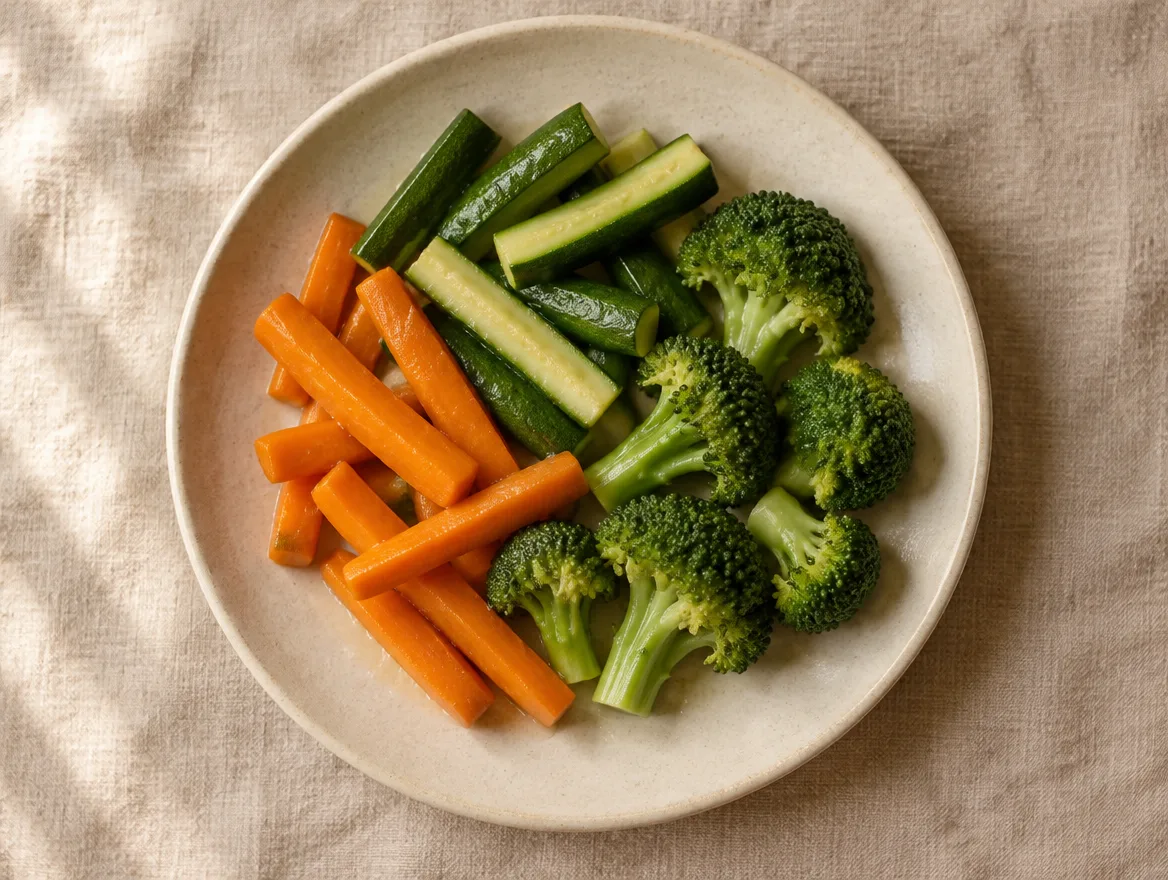
Illustration of the dish created with the help of AI.
- For babies from 8 months
- Prep 10 min · cook 20 min
- Very easy
- 3 baby portions
Allergens
Contains none of the 14 major allergens listed by EU and UK law (this also covers the 9 major US allergens).
Ingredients
- 1 large carrot (about 120 g / 4 oz)
- 150 g (about 5 oz) broccoli (about half a small head)
- 1 small zucchini (courgette), about 150 g / 5 oz
- 1 tsp olive oil, optional
Method
- 1Peel the carrot and cut it into sticks about 6 cm (about 2½ inches) long and as thick as an adult's finger. Cut the thicker end of the carrot lengthwise into quarters.
- 2Separate the broccoli into florets with a stem 3 to 4 cm (about 1½ inches) long. Wash the zucchini and, leaving the skin on, cut it into sticks the same size as the carrot.
- 3Pour two fingers of water into a pot, set a steamer basket in it and bring to a boil. Arrange the carrot in the basket, cover and steam for 8 minutes.
- 4Add the broccoli and steam for 4 minutes. Then add the zucchini and steam for another 6 to 7 minutes.
- 5Check each kind of vegetable: a piece must squash between your thumb and forefinger with no effort. Carrot usually takes the longest. If it resists, take out the other vegetables and steam the carrot for a few more minutes.
- 6Let cool, drizzle with the olive oil if you like, and offer two to three pieces at a time.
Nutrition per 100 g
- Energy
- 40 kcal
- Protein
- 1.7 g
- Fat
- 1.5 g
- Carbohydrate
- 6 g
- Fiber
- 2 g
- Iron
- 0.5 mg
- Calcium
- 31 mg
Approximate, calculated from the raw ingredients using USDA FoodData Central. Actual values depend on your ingredients and how you cook them.
Rate this recipe
Click a star, or choose one with the arrow keys and press Enter.
How soft is soft enough
Vegetables the way adults like them, still a little firm to the bite, are too hard for a baby. The test is finger pressure: a piece that squashes between your thumb and forefinger is one your baby can break down with their gums. Undercooked carrot is a choking hazard, so check it especially carefully. While eating, your baby sits upright and someone stays with them the whole time.
Adapting it by age
- From 8 months: sticks and florets the size of an adult's finger, which your baby holds in their fist.
- From 10 months: the same vegetables cut into pieces of about 1 cm (a scant ½ inch). Cut the carrot into half-moons, not round coins.
- From 12 months: a side dish with the family lunch, still cooked soft.
Variations
Cauliflower, green beans, sweet potato and pumpkin are prepared the same way. If you don't have a steamer basket, a metal sieve (strainer) that sits on the pot, covered with a lid, will do.
Safe feeding
Always feed your baby sitting upright and never leave them alone while eating. Offer a new food in the morning or early afternoon and watch for a reaction over the next two to three days. Before 12 months, add no salt, sugar or honey. Food is best eaten straight away; if any is left, cool it quickly, keep it in the fridge until the next day at the latest, and throw away anything left in your baby's bowl. This recipe is for information and doesn't replace advice from your pediatrician or health visitor, especially if your baby has a food allergy or severe eczema.
How to tell gagging from choking and when to introduce allergens: Starting Solids: When to Begin and How to Know Your Baby Is Ready.
Keep track of what your baby tries
In the HannaH app you log every new food, the texture, how much your baby ate and how it went down. If a rash appears, you can show your pediatrician an exact list instead of trying to remember.
More meals for babies from 8 months
How many meals a day and a sample week: 8 Month Old Baby Food: Meal Plan and Finger Foods