Recipes · teething
Teething Foods for Babies: Chilled Ideas and What to Avoid
Many teething babies like something cold. Chilled fruit, yogurt and soft sticks to gnaw on, and why hard-frozen food and rusks aren't for young babies.
When teeth are coming through, some babies eat less for a few days or refuse the spoon. Food isn't a cure for teething, but many babies find something cold soothing on swollen gums, so it's worth offering something cold and soft.
The order teeth come in, which symptoms are real and when teething isn't the cause are covered in Teething symptoms and myths. Here are ideas for the plate.
Why chilled, not hard-frozen
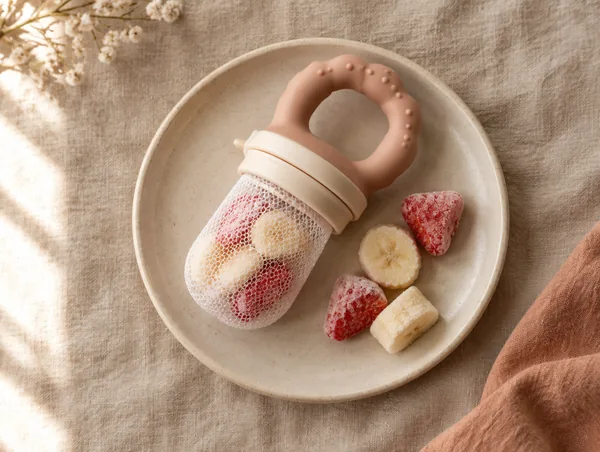
Food should come from the fridge, not the freezer. Hard-frozen food and frozen teething toys are too hard for a baby's gums and can hurt them. If you put frozen fruit in a mesh feeder, leave it at room temperature for a few minutes to soften. For the feeder, it's better to freeze pieces of fresh fruit yourself, because store-bought frozen berries are safest boiled before eating: they have been linked to hepatitis A and norovirus outbreaks. Never put an ice cube or a piece of frozen fruit straight into your baby's hand or mouth.
Cold ideas from 6 months
- Frozen fruit in a mesh feeder: banana, pear or watermelon, straight from the fridge or briefly frozen and softened.
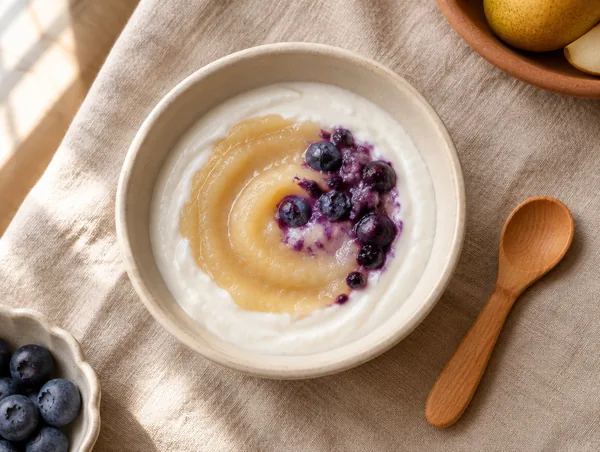
- Yogurt with fruit puree, served straight from the fridge.
- Chilled pear and plum puree or baked apple.
- Avocado and banana made with fruit that's been in the fridge.
From 8 months: something to gnaw on
A baby who already eats pieces of food likes to gnaw on something soft and cold.
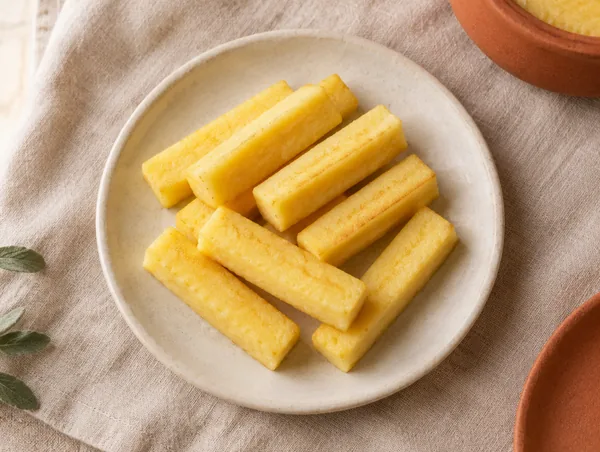
- Polenta fingers, straight from the fridge, without browning them in the pan.
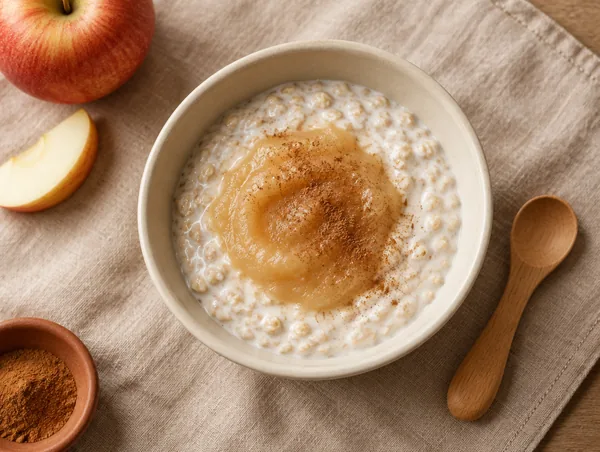
- Overnight oats, cold and thick.
- Chilled sticks of cooked carrot or sweet potato, soft enough to squash easily between your fingers.
- A stick of ripe banana or pear from the fridge, which your baby can hold without a feeder.
How to use a mesh feeder
A fruit feeder is a mesh bag or a silicone teat with small holes on a handle (sold as a mesh feeder, a fruit feeder pacifier or, in the UK, a fruit feeder dummy). You put a piece of soft fruit inside, your baby gnaws and sucks on it, and only juice and mushy fruit come through the holes.
- Your baby sits upright, and you stay with them the whole time.
- Check the mesh before every use. If it's torn or worn, replace it.
- Take the feeder apart and wash it straight after eating.
- Freeze the fruit, not the feeder, unless the manufacturer explicitly says you can.
The feeder is an extra, not a replacement for a meal. Your baby still needs soft pieces to hold on their own, so they learn to chew.
Teething snacks that aren't for little babies
- Hard store-bought teething biscuits and rusks. They often contain sugar, and a young baby can't chew a hard piece that breaks off.
- Hard bread crusts, raw carrot and hard apple in chunks, for the same reason.
- Sweet things in general. Sugar also harms the first teeth, which you brush twice a day from the day they appear.
- Teething gels with benzocaine or lidocaine, and amber teething necklaces. The gels can be dangerous for young babies, and necklaces carry a risk of strangulation and choking, with no proven benefit. The FDA and the American Academy of Pediatrics warn against both.
When to call your pediatrician
Teething doesn't cause a fever of 38 °C (100.4 °F) or higher, diarrhea or a rash all over the body. If your baby has any of these, or refuses both food and milk, call your pediatrician (in the UK, your GP or NHS 111). Decide on pain relief only together with your doctor.