Recipes · by age
10 Month Old Baby Food: Meal Ideas and Daily Menu
A 10 month old eats almost everything the family does, just without salt and cut smaller. How many meals they need, a sample day and seven dinner ideas.
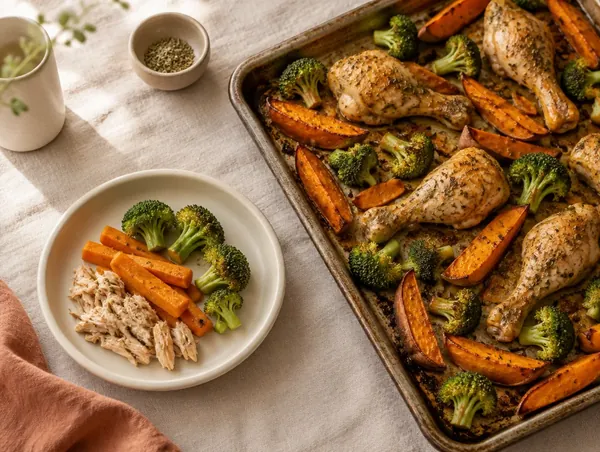
At ten months, your baby eats almost everything the rest of the family eats, just without salt, with milder seasoning and cut smaller. The easiest approach is to cook one meal for everyone, set your baby's portion aside before you add salt, and let the adults season their own plates.
How many meals a day
From 9 to 12 months, the World Health Organization recommends three to four meals a day and one to two snacks. (In the UK, the NHS says babies under 12 months don't need snacks and suggests extra milk feeds instead if they're hungry between meals.) Milk is still part of the day, usually in the morning, in the afternoon and before bed.
What changes
- Finger feeding: small pieces of soft food, which your baby picks up between thumb and forefinger.
- Their own spoon: put a spoon in your baby's hand, even though most of the food will end up around their mouth. That's how they learn.
- A cup: offer water with meals from an open cup or a straw cup.
- Round foods: cut grapes, cherry tomatoes and berries lengthwise into quarters, and squash peas.
A sample day
- Early morning: milk.
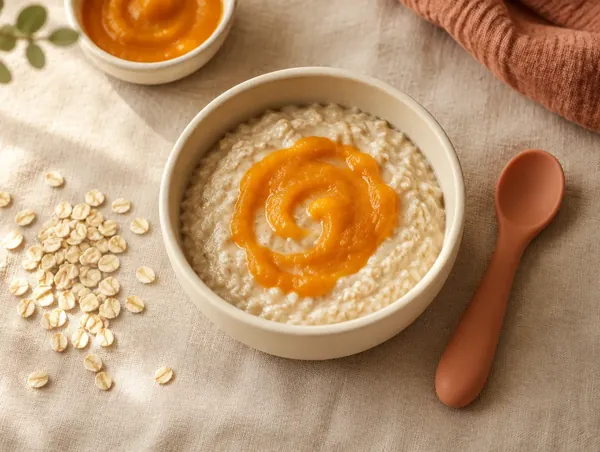
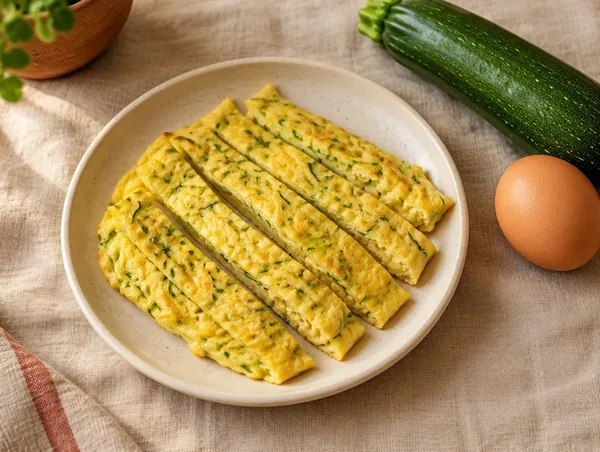
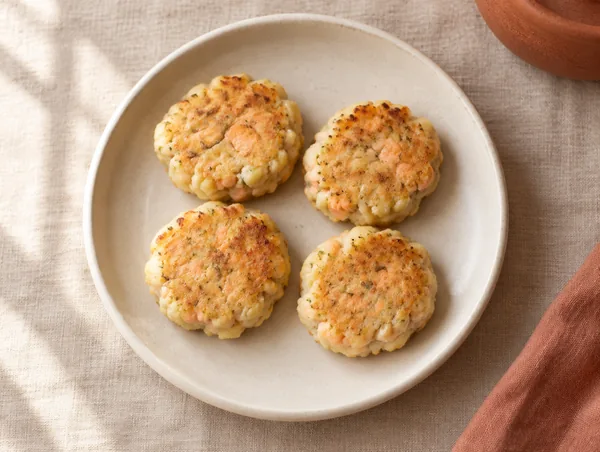
- Breakfast: zucchini (courgette) omelette and pieces of fruit, or oatmeal (porridge).
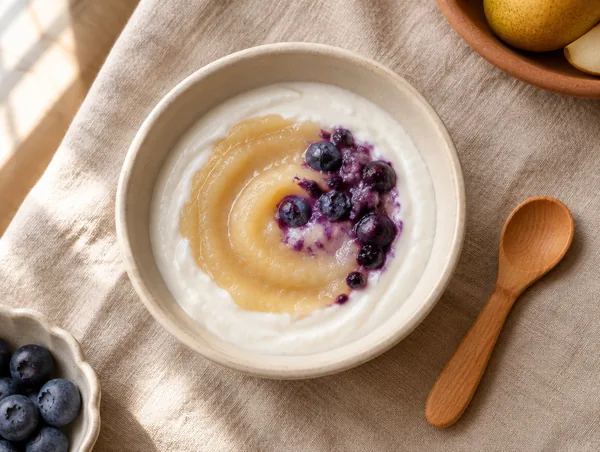
- Snack: plain yogurt with fruit puree.
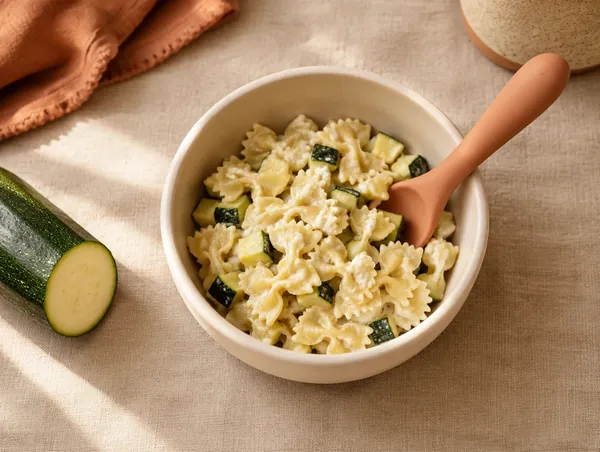
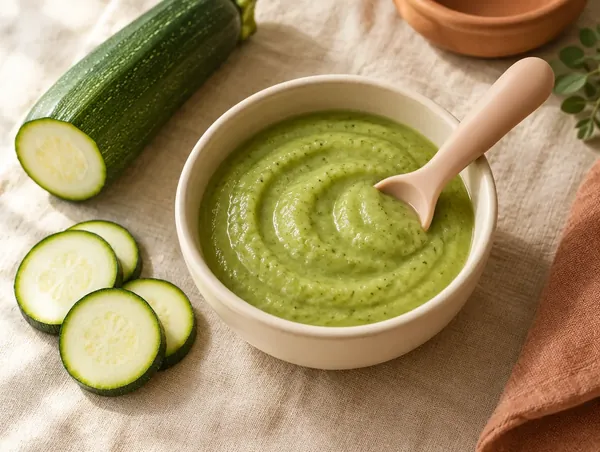
- Lunch: pasta with zucchini and cottage cheese.
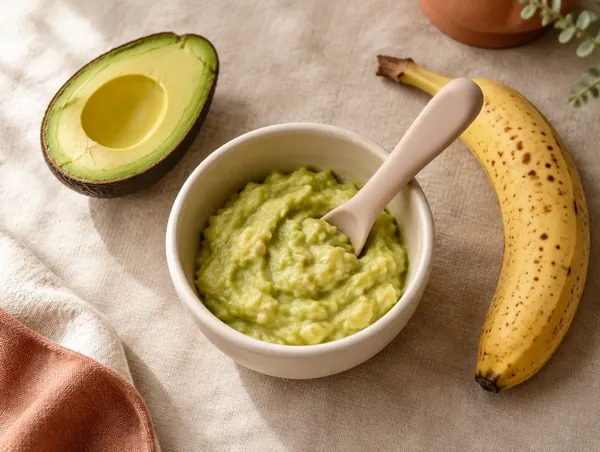
- Snack: soft fruit cut into pieces, or avocado and banana.
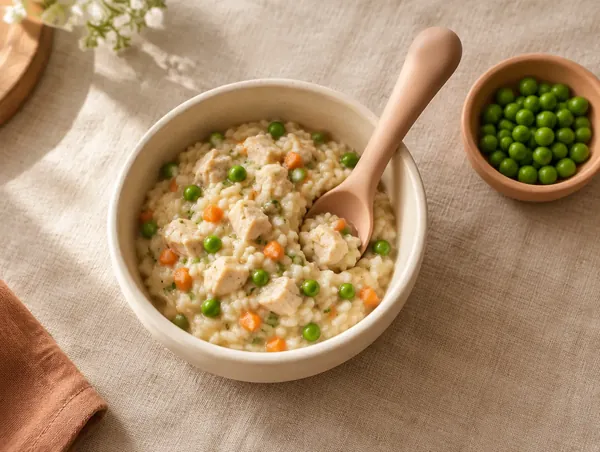
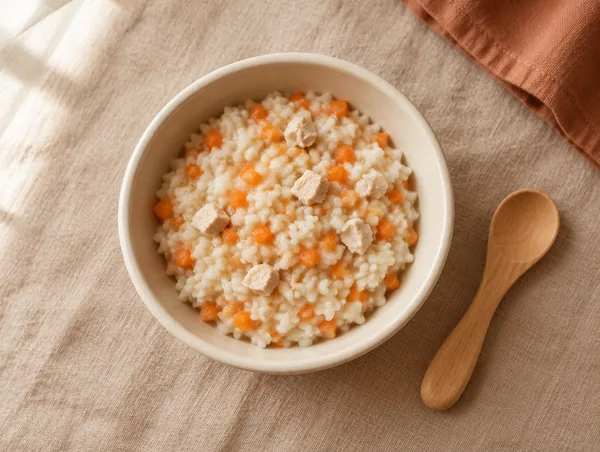
- Dinner: chicken and pea risotto.
- Before bed: milk.
Seven dinner ideas
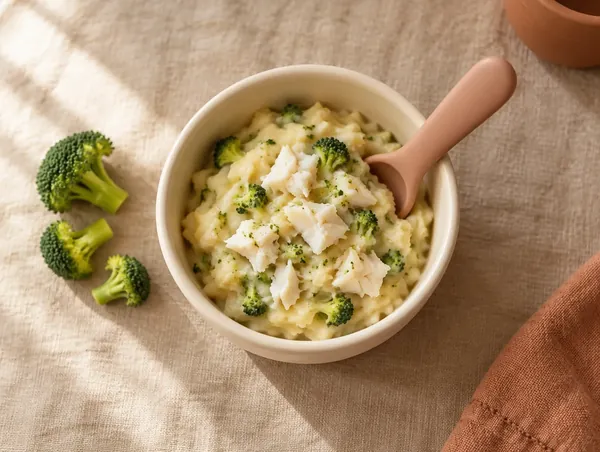
- Chicken and pea risotto
- Pasta with zucchini and cottage cheese
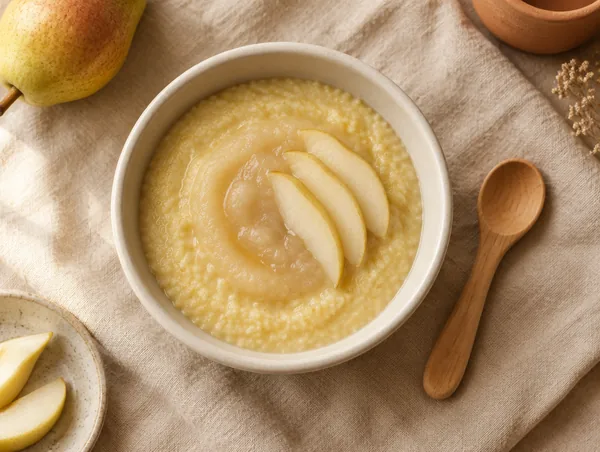
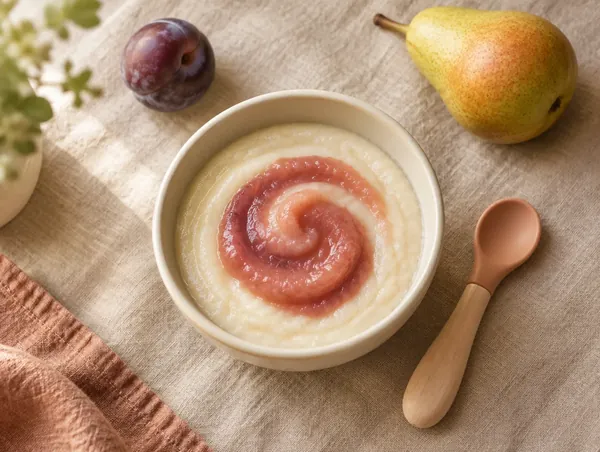
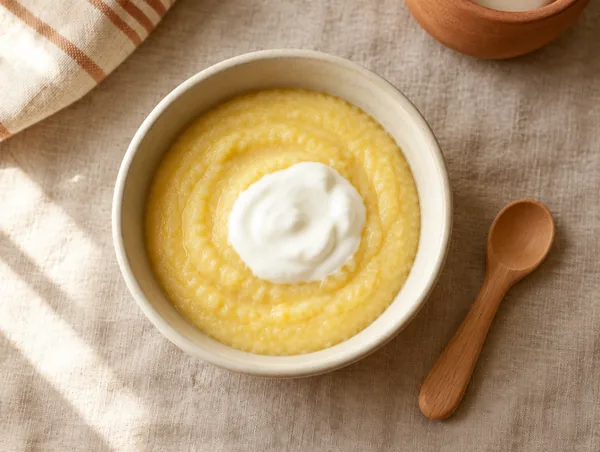
- Semolina porridge with fruit
- Zucchini omelette and a slice of bread
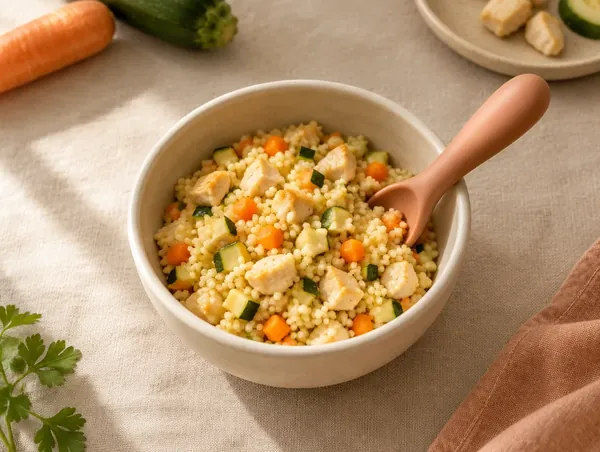
- Couscous with vegetables and chicken
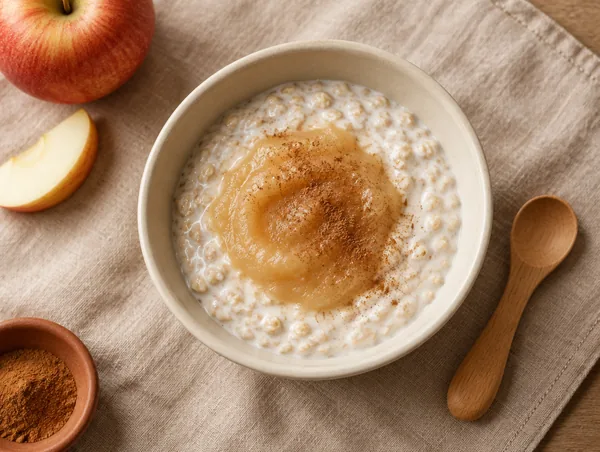
- Oatmeal with fruit
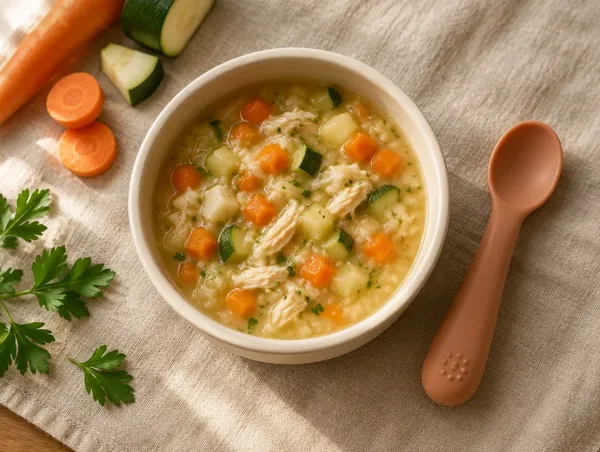
- Vegetable and chicken soup, in small pieces
If your baby suddenly doesn't want to eat
Between nine and twelve months, many babies eat less and become pickier than before. Growth slows down, and the world is more interesting than the plate. Keep offering a variety of foods without coaxing. If your baby is growing well and has plenty of wet diapers (nappies), there's no reason to worry. If they're losing weight or seem low on energy, see your pediatrician.
Sources
- World Health Organization: Infant and young child feeding
- World Health Organization: WHO Guideline for complementary feeding of infants and young children 6-23 months of age
- ESPGHAN (European Society for Paediatric Gastroenterology, Hepatology and Nutrition): Complementary Feeding: A Position Paper by the European Society for Paediatric Gastroenterology, Hepatology, and Nutrition (ESPGHAN) Committee on Nutrition
- NHS: Weaning
- NHS: Choking and gagging on food
- NHS: Foods and drinks to avoid
- American Academy of Pediatrics (HealthyChildren.org): When Can Babies Start Solid Foods? Readiness & Feeding Tips